Acupuncture Massage Gun Protocols: Safe Meridian Targeting
By Priya Menon • 19th Mar
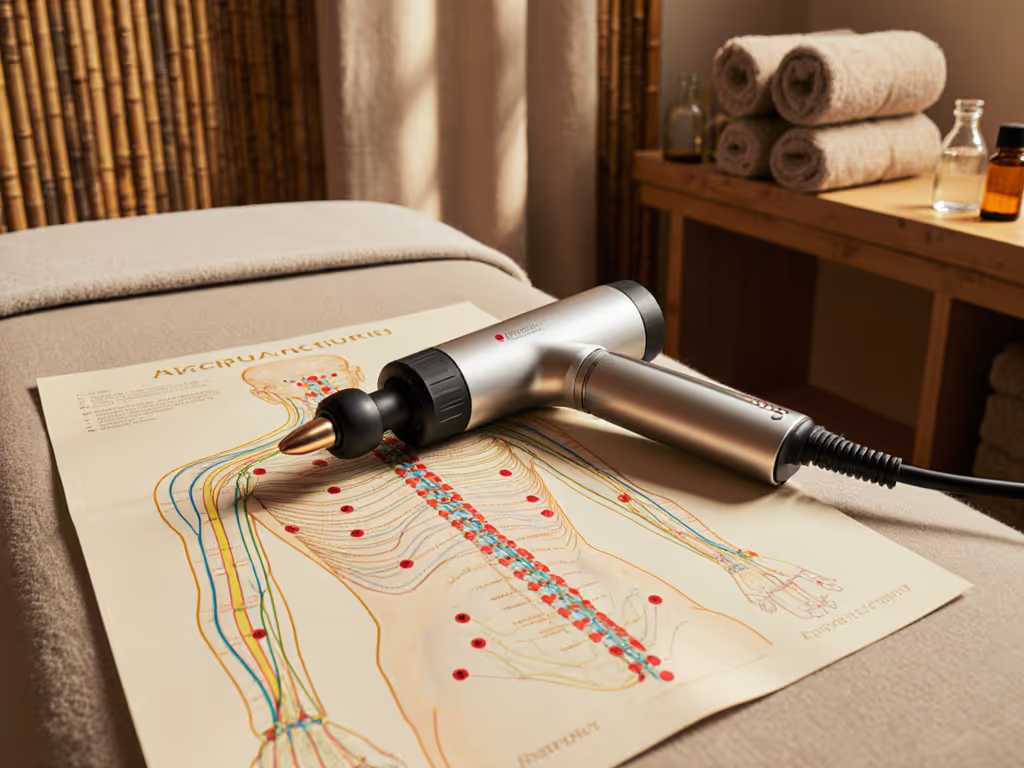
Acupuncture massage gun protocols blend percussive therapy with meridian therapy techniques, but success hinges on replicable methodology rather than marketing language. The intersection of Traditional Chinese Medicine principles and modern percussion devices demands precise targeting, measured pressure, and transparent safety boundaries. This guide builds from standardized protocols (tested the same way, every time), so results translate to your hands and body.
What Is the Relationship Between Acupuncture Points and Percussion Therapy?
Acupuncture works through stimulation of specific meridian pathways and acupoints. Percussion massage guns apply rapid, directional vibrations (typically 20 to 3,200 pulses per minute, depending on the device) to soft tissue. When aligned with acupressure point targeting, the percussion can complement the meridian activation without needle insertion. However, this is not acupuncture; it is acupressure-adjacent percussion therapy.
The mechanism differs fundamentally from traditional needle work. A massage gun delivers broad-area warming and circulation stimulation, whereas acupuncture needles access precise anatomical depths. The practical overlap occurs at the surface: you can use a massage gun to warm tissue around acupoints before acupuncture or as a standalone meridian-supportive tool. The science here is limited to circulation, tissue compliance, and subjective comfort (not to unproven "energy" claims).[1][5] For evidence on what percussive therapy can and cannot do, see our proven benefits of percussive therapy summary.
How Do You Identify and Target Meridian Points Safely with a Massage Gun?
Locating Acupoints Without Overtreating
TCM integration with massage requires a methodical location protocol. Acupoints occupy fixed anatomical zones, not broad muscle groups. A 0.5-centimeter error in placement can mean the difference between stimulating a therapeutic point and irritating adjacent nerves or blood vessels.
Step 1: Identify the meridian pathway. Common acupoints lie along the Conception Vessel (midline front), Governing Vessel (midline back), and limb-based channels. Consult a meridian map or work with a licensed acupuncturist to mark target zones on your body before using a massage gun alone.
Step 2: Palpate and locate "hot spots." Use your fingers to find tender or taut tissue within the target zone. These often align with acupoint locations.[2] Mark them with a washable pen or memorize their anatomical landmark (e.g., "three finger-widths below the kneecap, outside edge").
Step 3: Start with distal stimulation. Before applying the massage gun directly to the acupoint, introduce the device to nearby soft tissue first. This warms the meridian pathway and reduces shock to the nervous system.[5]
Pressure and Duration Fundamentals
Overpressure is the leading cause of tissue damage and abandoned recovery tools. Light to moderate pressure is standard; extreme downward force is not necessary.[1] Research on percussion therapy shows that 2 to 5 minutes per area is the consensus range for safety.[2][3]
For acupoint stimulation specifically:
- Spend 20 to 30 seconds per acupoint when targeting trigger points or energy flow stagnation points.[2]
- Use moderate pressure (a 6/10 to 7/10 intensity) (on a pain scale where 10 is unbearable). If pain exceeds this, reduce pressure immediately.[2]
- Never linger longer than 2 to 3 minutes on any single meridian zone.[3]
- Turn the device on before placing it on your body to avoid sudden, jarring contact that can bruise tissue.[1]
Which Massage Gun Attachments Work Best for Meridian Targeting?
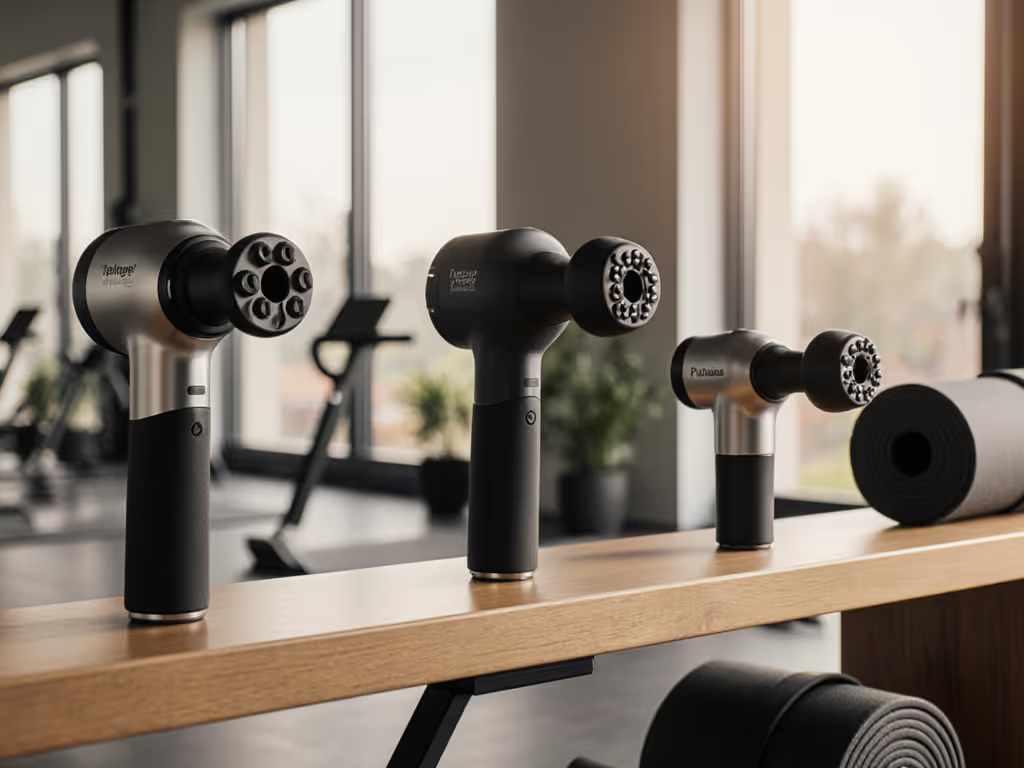
Attachment selection is critical and often overlooked. For a deeper breakdown, see our massage gun heads compared guide. Different heads distribute percussion force in different patterns; the wrong head can damage tender zones or miss the target entirely.
Attachment Guide by Meridian Zone
| Attachment Type | Meridian Application | Best For |
|---|---|---|
| Bullet | Trigger points and acupoint "knots" | Precise, deep stimulation of single meridian points on hands, feet, and distal pathways |
| Flat | Broad meridian pathways on flat muscle surfaces | Shoulders, upper back, and bony surface areas (disperses force gently) |
| Round | General meridian warming and circulation | Large muscle groups along limb channels and torso; versatile starting point |
| Fork | Spinal column and central meridians (Governing Vessel) | Muscles flanking the spine; does not contact bone directly |
The bullet head is optimal for acupoint work because it concentrates vibration in a small radius, mimicking the precision of needle insertion (without penetrating skin).[4] However, avoid bullet heads on bony prominences, the front of the neck, or the groin. These zones contain arteries, nerves, and sensitive structures that percussion can irritate.[3]
What Meridian Zones Must You Avoid?
Certain anatomical areas are contraindicated for any massage gun use, regardless of attachment. Understanding these boundaries prevents nerve damage and vascular injury. Review our massage gun safety zones to avoid before you begin.
No-Go Zones for Percussion Therapy:
- Neck (anterior/front): Carotid arteries, jugular veins, and the vagus nerve are superficial here. Percussion can disrupt blood flow or trigger unexpected reflex responses.[3]
- Bony prominences: Ribs, sternum, and exposed bone can become irritated or develop inflammation when percussed directly.[3]
- Groin: Femoral arteries and sensitive tissues make this zone unsafe.[3]
- Bruised, cut, or abraded skin: Do not apply percussion over existing injury. Wait until the area is fully healed.[3]
- Over joints: Knees, elbows, and shoulders have complex soft-tissue structures; percussion here can aggravate bursa sacs and tendons rather than activate meridian pathways.[2]
If you are unsure whether a zone is safe, consult an acupuncturist or physical therapist before self-treatment.
How Do You Build a Safe Daily Meridian Protocol?
Protocols work only if they are replicable and fit into actual life. A 2 to 5 minute routine that lives in your morning or evening is more valuable than a perfect 30-minute session you'll never complete.
Pre-Acupuncture Warm-Up (3 to 5 minutes)
Use this before a professional acupuncture appointment to prepare tissue and meridian pathways:
- Set device to lowest speed setting and select a round or flat attachment.[1]
- Sweep the meridian pathway for 30 seconds at light pressure (3/10 intensity).
- Locate any "hot spots" using your fingers; mark them visually.
- Apply gentle percussion to each point for 20 to 30 seconds using a bullet head and low-to-moderate speed.[2]
- Hydrate and allow 2 to 3 minutes of rest before acupuncture begins.[2]
Post-Work Meridian Flush (3 to 5 minutes)
After acupuncture or at the end of your day:
- Use moderate speed and pressure (5–6/10 intensity).
- Sweep large meridian channels (e.g., arm channels from shoulder to wrist; leg channels from hip to ankle) at slow, controlled speed.[2]
- Change the angle of the device to approach muscles from multiple directions; this prevents repetitive strain patterns.[2]
- Avoid staying on one point longer than 2 to 3 minutes.[3]
- Include gentle stretching afterward to extend the benefit.[2] To stack benefits safely, follow our recovery sequencing guide for when to combine percussion with stretching and other modalities.
What Are the Limits of Massage Guns for Energy Flow Stimulation?
Honesty is critical here. Massage guns warm tissue, improve blood flow, and can activate acupoint zones, but they cannot replicate the specificity or depth of professional acupuncture needles. They also cannot "move Qi" in any measurable, repeatable way.
What percussion therapy can do:
- Increase local circulation and tissue temperature in target zones.
- Reduce muscular tension that may be blocking meridian pathways.
- Provide acupressure-like stimulation to acupoints without skin penetration.
- Complement professional acupuncture by preparing and maintaining tissue health between appointments.
What it cannot do:
- Replace needle insertion or the depth of professional acupuncture.
- Resolve systemic imbalances without broader TCM support (diet, lifestyle, professional treatment).
- Claim to "restore energy flow" in ways you can measure in a lab or feel consistently.
Tested the same way, every time, so skepticism, not faith, guides safe protocol design.
Practical Safety Checklist for Meridian Targeting
Before each session, verify these conditions:
- Device is turned on before contact with skin.[1]
- Skin is intact (no cuts, bruises, or rashes).
- Start on the lowest speed until you assess your tolerance.[1]
- Pressure is light to moderate; let the device do the work.[1]
- No neck (anterior), joints, or bony areas are targeted.
- Timer set: maximum 2 to 3 minutes per acupoint zone.[3]
- You are relaxed and breathing; tension reduces benefit.[1]
- Hydration and stretching follow the session.[2]
Further Exploration
Meridian-targeted massage gun use sits at the boundary of Traditional Chinese Medicine philosophy and evidence-based percussion therapy. To deepen your practice, consider consulting a licensed acupuncturist or TCM practitioner who can map your meridian imbalances and recommend personalized acupoint protocols. Pairing percussion tools with professional acupuncture, cupping, or herbal support creates a synergistic effect that neither tool alone can achieve.
If flexibility is a key goal, use our range of motion protocol for an evidence-backed 4-minute routine. Start with the protocols outlined here, measure your own comfort and range of motion improvements over two weeks, and adjust pressure, duration, and frequency based on what your body reports, not on product marketing or unfounded claims about energy restoration. Method beats hype; your transparent testing over time will reveal whether this tool belongs in your recovery routine.
Related Articles