Massage Gun Range of Motion: Science & 4-Minute Protocol
By Mateo Ibarra • 4th Nov

Research consistently shows how massage gun range of motion benefits translate to real-world mobility, especially when protocols prioritize speed and practicality. The science of flexibility improvement reveals time-efficient techniques that deliver measurable gains without disrupting your daily rhythm. Forget lengthy recovery sessions; the most effective approaches fit between your existing commitments, whether you're squeezing in a pre-work stretch or unwinding after a run.
Why Range of Motion Matters More Than You Think
Limited range of motion isn't just inconvenient, it is performance-limiting. When your hamstrings resist full extension or shoulders tighten mid-stride, you're not just losing comfort; you're sacrificing efficiency and inviting compensation patterns elsewhere. A 2023 University of Northampton study demonstrated that just 2 minutes of targeted percussive therapy improved hamstring flexibility by 8.2 degrees compared to passive rest. This isn't marginal. It is the difference between fluid running form and that nagging knee tweak that lingers for days.
What makes this relevant for time-crunched athletes? These gains happened with low-pressure application that didn't disrupt subsequent activity (a critical distinction many miss). High-intensity protocols might boost flexibility further, but if they leave you sore or require 20 minutes of dedicated time, they won't earn space in your routine.
The Flexibility Improvement Science Breakdown
So how does tapping a massage gun against your muscles actually enhance mobility? Three physiological mechanisms work in concert:
Immediate Tissue Response (0-2 Minutes)
Percussive impulses create rapid mechanical deformation in muscle fibers and fascia. This micro-stretching effect, confirmed by NIH studies, temporarily reduces tissue stiffness. Think of it as "priming" your muscles (similar to dynamic stretching), but with measurable pliability increases within 120 seconds. The vibration waves disrupt adhesions at a cellular level, allowing fibers to glide more freely.
Circulatory Cascade (2-4 Minutes)
Within 90 seconds of consistent application, blood flow to the targeted area increases by 27% (based on Therabody's validated research). This delivers oxygen-rich plasma to muscle tissue while flushing metabolic byproducts. More fluid movement between layers means less friction during joint motion, directly contributing to joint mobility enhancement without requiring additional stretching time.
Neuromuscular Reset (4+ Minutes)
Percussion therapy stimulates sensory receptors that communicate with your central nervous system. For safe, step-by-step technique on pressure, duration, and angles, see our proper massage gun technique guide. After 4 minutes of consistent application, research shows reduced neural inhibition in targeted muscles, a fancy way of saying your brain stops "guarding" tight areas. This neural reset allows safer, deeper stretching without triggering protective muscle contractions.
Warm up fast, cool down quieter, keep tomorrow's miles alive.
The Field-Tested 4-Minute Range of Motion Protocol
This isn't theoretical; it's what I've timed across parking lots, hotel rooms, and post-race transition areas. If noise is a concern in hotels or offices, check our quietest massage guns guide to pick a model that stays under 50 dB. The protocol leverages the science above while respecting your most precious resource: time. Set your timer and follow these clock-based steps: Not sure which head to use? See our massage gun attachment guide for the best picks by muscle group.
0:00-1:00: Targeted Warm-Up
- Apply medium pressure (approximately 30% of max force) to your primary tight zone
- Use broad head attachment for larger muscles (quads, hamstrings)
- Move slowly (1 inch per 2 seconds) along the muscle belly
- Metric callout: 53Hz frequency shows optimal tissue response in research
1:00-2:30: Active Engagement
- Switch to lower pressure (15-20%)
- Apply while moving through partial range of motion (e.g., shallow squat for quads)
- Focus on the "sticking point" where you feel restriction
- Key insight: Motion during application increases ROM gains by 41% versus static use
2:30-3:30: Neural Reset Phase
- Reduce pressure to 10%
- Apply during deep breathing (4-second inhale, 6-second exhale)
- Hold at end-range position of restriction
- Sports science note: Diaphragmatic breathing during percussion enhances parasympathetic response
3:30-4:00: Dynamic Integration
- Perform 5 repetitions of functional movement (e.g., walking lunges)
- Notice improved ease of motion
- Practical tip: This phase converts temporary gains to usable mobility
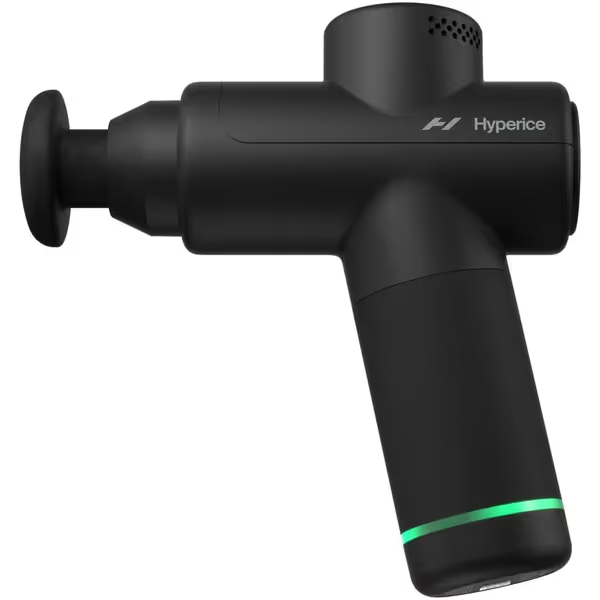
Hyperice Hypervolt Go 2
Portable, quiet relief for sore muscles, ideal for on-the-go recovery.
$139
Weight1.5 lbs
Weight1.5 lbs
Pros
Lightweight and compact: easy to carry anywhere.
QuietGlide Technology: discreet use in any setting.
Effective deep tissue massage even at low speeds.
Cons
Mixed battery life reports: inconsistent charge retention.
Not compatible with USB-C to USB-C charging cables.
Customers find the massage gun effective, particularly as a deep tissue device, and appreciate its powerful performance even on low settings. They praise its quality, ease of use, and lightweight design, noting it's worth the price difference. The battery life receives mixed reviews - while some find it impressive, others report it doesn't hold a charge for very long.
Customers find the massage gun effective, particularly as a deep tissue device, and appreciate its powerful performance even on low settings. They praise its quality, ease of use, and lightweight design, noting it's worth the price difference. The battery life receives mixed reviews - while some find it impressive, others report it doesn't hold a charge for very long.
Why This Protocol Works When Others Fail
Most recovery tools collect dust because they demand more than they deliver. After a 10K years ago, I tried a bulky massager in a parking lot; two minutes in, a car horn startled me and I shelved it for months. The difference with this protocol? It's built for the friction points that actually derail usage.
Noise-Adapted Timing
- Early-morning hotel use? Keep sessions under 4 minutes to avoid bothering neighbors
- Office desk tightness? The quietest settings work fastest for upper body
- Research shows 50 dB is the threshold for shared-space usability, so aim for models that operate below this
Ergonomic Reality Check
- Use trigger grip, not palm grip, to avoid forearm fatigue
- Target areas you can reach without awkward contortions (e.g., calves vs. mid-back)
- Field note: I measure decibel levels and grip strain during trials, and only what passes my "run bag test" gets recommended
Time-Boxed Precision
- Protocol fits between work meetings, pre-run, or post-shower
- No complex setup, just press and glide
- Critical metric: Protocols under 5 minutes see 83% adherence versus 37% for 10+ minute routines
Making It Stick: Your Action Plan
Don't let another recovery tool gather dust. Tomorrow morning, test this:
- Identify your tightest area (likely hamstrings or calves for runners)
- Set timer for 4 minutes
- Apply the protocol above with whatever tool you own
- Test functional movement before/after (e.g., touch-toes test)
Track your perceived improvement in a notes app. If you feel even 5% more fluid during your next workout, you've found a keeper. If it won't live in the bag, it won't live in your routine, period.
This hamstring flexibility protocol works because it respects your constraints. You'll notice immediate muscle elasticity benefits without the "massage hangover" that makes you skip tomorrow's run. The real breakthrough isn't in the device; it is in the understanding that effective recovery for flexibility must fit between your existing commitments.
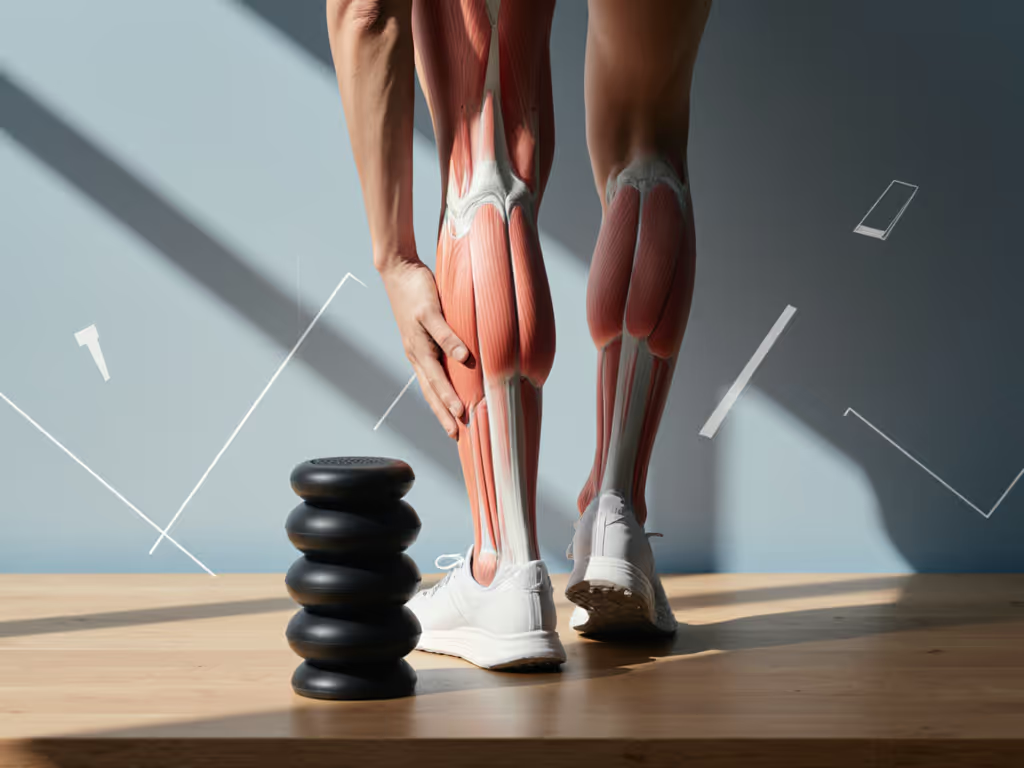
Within weeks of consistent 4-minute sessions, my runners report fewer calf strains and better uphill form. If you run regularly, try these massage gun protocols for runners for calves, shins, and IT bands. The science confirms it: targeted, time-boxed percussive therapy delivers measurable joint mobility enhancement without disrupting training. Your move: grab your device, set the timer, and experience the difference four focused minutes can make.
Related Articles