Proprioception: How Massage Guns Enhance Body Awareness
By Aiko Tan • 6th May
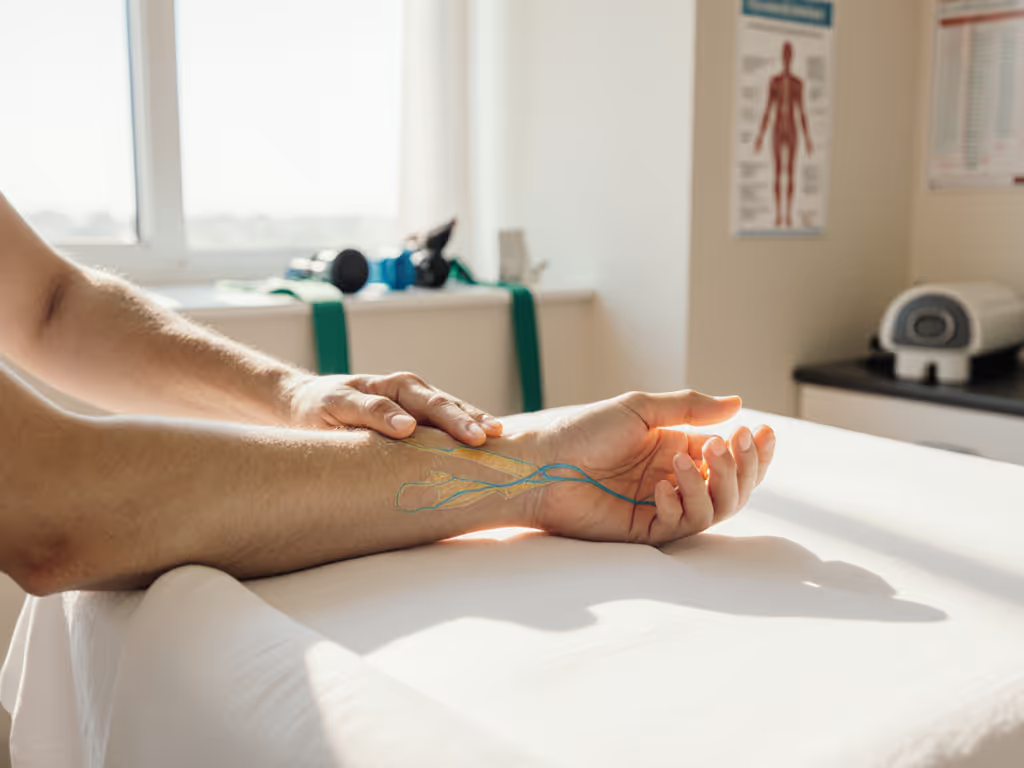
You already know the sensation, that moment when your foot falls asleep and you can't quite feel the floor beneath it. Your eyes are open, but your body's internal GPS has gone fuzzy. That GPS system is proprioception, and massage gun proprioception benefits extend far beyond reversing temporary numbness. When you engage your proprioceptors, the sensory receptors embedded in muscles, tendons, and joints, through neuromuscular reeducation, you're teaching your nervous system to rebuild its sense of where your body is and how it moves through space. A percussion massage gun, when used strategically, becomes a tool for recalibrating this system, restoring the smooth coordination and spatial awareness that desk work, repetitive training, and travel erode. For a deeper dive into proprioception and percussive therapy mechanisms, see our proprioception guide.
This isn't abstract neuroscience. Runners who can't feel their calf engagement. Lifters whose glutes refuse to "fire" during a squat. Deskworkers whose neck and shoulders have locked into a posture they no longer consciously register. These are failures of proprioceptive feedback, and they're reversible through consistent, constraint-aware application of the right recovery tool.
What Proprioception Is and Why It Matters
Unlike sight, smell, or touch, proprioception operates silently in the background. It's your body's sense of position, movement, and acceleration, the mechanism that lets you touch your nose with your eyes closed or walk without staring at your feet. Proprioceptors, specialized nerve endings in muscle spindles and Golgi tendon organs, fire continuously, sending real-time position and tension data to your brain and spinal cord. This feedback loop is so fundamental that when it degrades, everything else breaks: balance falters, movement becomes clunky, injury risk climbs.
What the research confirms is that body awareness improvement through proprioceptive activation isn't a side effect of massage, it is the mechanism. When a percussion tool applies rhythmic pressure to muscle tissue, it stimulates these receptors, flooding your central nervous system with corrected position and length data. Your brain responds by recalibrating muscle tone, recruitment patterns, and coordination.
For practical purposes, this means:
- Faster motor control: Your nervous system responds more accurately to directional changes and load shifts.
- Better injury resilience: Active proprioceptive feedback catches imbalances before they become sprains or strains.
- Restored range of motion: Muscles that "know" where they are can relax and lengthen more efficiently than muscles trapped in protective guarding.
- Reduced chronic pain: Through the Gate Control mechanism (proprioceptive signals travel faster to the brain than pain signals), massage-induced proprioceptive input actually dampens pain perception in real time.
How Massage Guns Activate Proprioceptors
A percussion massage gun operates on a simple principle: rapid, controlled impacts create micro-compressions in muscle tissue. Each impact triggers proprioceptor firing. Unlike static stretching or foam rolling, the repetitive cadence provides sustained, high-frequency sensory input, essentially overloading your proprioceptive system with corrected position data.
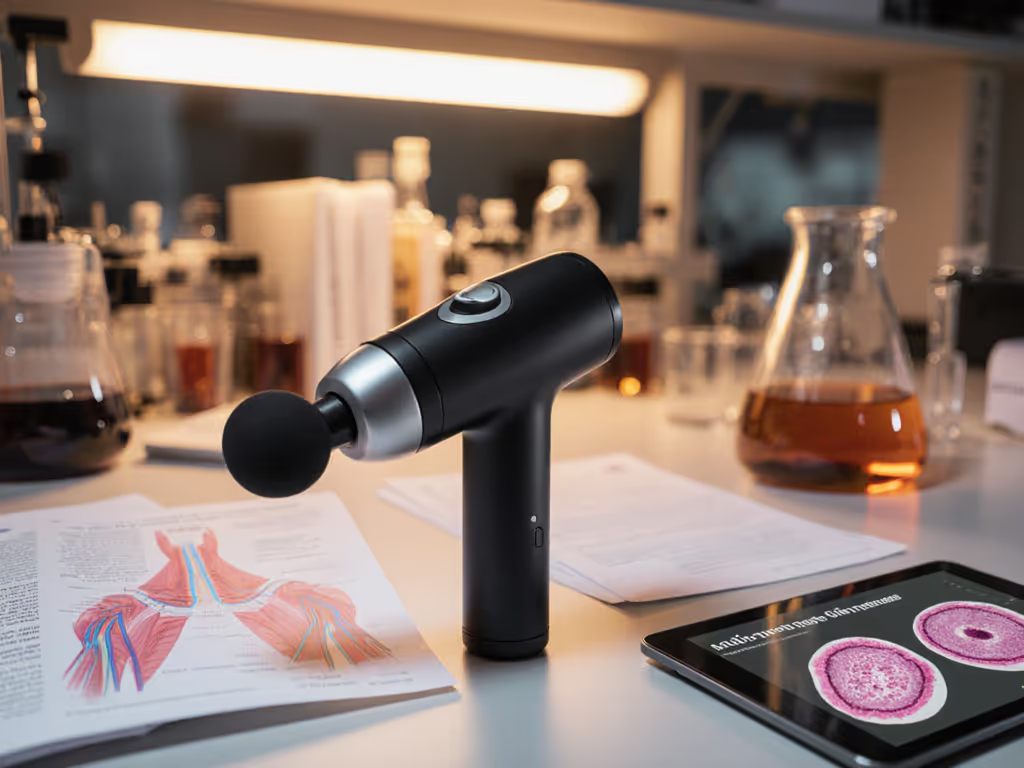
The research is specific: studies comparing massage treatment to control groups show measurably greater proprioceptive acuity in the treated area. In one controlled study, ankle joint proprioceptive accuracy improved significantly after calf massage, with changes in muscle fiber angles confirming that superficial tissue reorganization was occurring. The mechanism isn't mysterious, it is neural recalibration through sensory saturation.
Where balance enhancement therapy and movement efficiency protocols converge is in the principle of consistency. One session clears fog temporarily. Weekly use rebuilds sustained proprioceptive sensitivity, and within two to three weeks, users report tangible shifts in how their body feels during movement and at rest.
Step-by-Step Proprioception Protocol
The following tutorial is constraint-led and time-bound, designed for real-world use in the margins of busy schedules, from hotel rooms to office corners.
Phase 1: Baseline Assessment (2 minutes)
Before applying the massage gun, map your proprioceptive blindspots:
- Stand on one leg with eyes closed for 30 seconds. Note any wobble or ankle/hip compensation.
- Touch your fingertip to your nose repeatedly without looking.
- Identify areas of chronic tightness: tight calves, "dead" glutes, locked shoulders, forward-folded neck.
These are your priority zones. Write them down. They guide tool placement.
Phase 2: Activation (5-7 minutes)
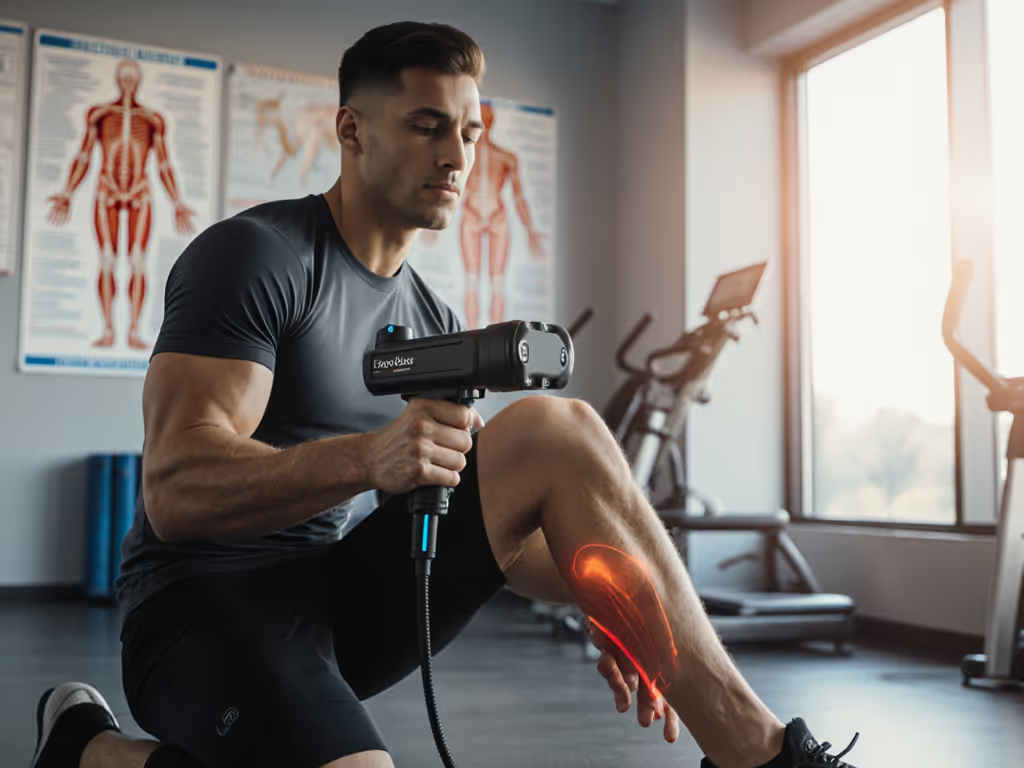
Apply the massage gun to each priority zone using a perpendicular angle (90 degrees to muscle fiber direction for large muscles like quads and glutes; tangential for calves and IT band). Spend 60-90 seconds per area:
- Glutes and hip external rotators: Sit on a firm surface. Work the largest muscle groups first, as they drive larger proprioceptive signals.
- Quadriceps: Seated or standing. Front thigh, four sweeps from knee to hip, all zones.
- Calf complex: Seated, foot elevated or flat. High proprioceptive density, so work thoroughly.
- Upper back and posterior shoulder: Solo reach is challenging. Use a wall for guidance or target accessible zones (upper traps, rhomboids).
- Lateral glute and IT band: Side-lying or standing. This is a high irritability zone, so use moderate pressure for 60-90 seconds.
The goal is sensory input, not tissue destruction. For step-by-step safety and technique cues, see our proper massage gun usage guide. Use a cadence that feels like rapid, controlled pressure (typically 2400-3200 impacts per minute from most devices), though you're measuring by feel, not specs.
Phase 3: Integration (1-2 minutes)
Immediately after activation, perform a light movement pattern related to your use-case:
- Runner: Walk, then jog lightly in place. Feel the calf and glute feedback returning.
- Lifter: Bodyweight squat, hinge, or lunge pattern. Notice glute and leg recruitment clarity.
- Deskworker: Shoulder circles, neck rotation, postural reset. Feel the upper-back proprioceptive reboot.
- Traveler: Walk around your space. Your gait will feel visibly more coordinated.
This integration phase seals the neural adaptation. Movement without it leaves the proprioceptive signal incomplete.
Phase 4: Reassessment (1 minute)
Repeat your baseline tests. Single-leg stance steadier? Nose-touch more accurate? Movement smoother? These micro-wins confirm the protocol is working. Record them, this feedback loop sustains adherence.
Practical Constraints: Quiet, Compact, Reliable Charging
A loud massage gun stored in a closet helps nobody. The gap between "owning a recovery tool" and "using it consistently" is friction. Here's what actually matters for sustained use:
Decibel reality: Hotel rooms, early mornings, shared spaces, so noise kills adoption. Aim for 60 decibels or lower. If noise is a priority, see our quiet massage guns tested for shared spaces. If a device requires shouting conversations around it, it won't survive a week in your routine. I tested a hyped model on a red-eye, mid-aisle. Three glares in the first 20 seconds. The cadence was brutal, the handle rattled the tray table, and the case was a brick. A quiet USB-C alternative now slips beside my passport and earbuds. It's used at the gate, in the hotel at 6 a.m., in the airport gym without a second glance.
Charging architecture: If it needs a special charger, you've already failed the travel test. USB-C is the standard now. Proprietary connectors create cascading friction: you forget the cable, you lose compatibility, you're tethered to specific outlets. USB-C means you recharge from your laptop, power bank, or the hotel desk. One cable, one ecosystem.
Compact and balanced: A handle under 8 inches long and under 1.5 pounds (head included) is the sweet spot. Anything heavier induces grip fatigue during a 7-minute protocol. Anything bulkier won't live in a gym bag or carry-on.
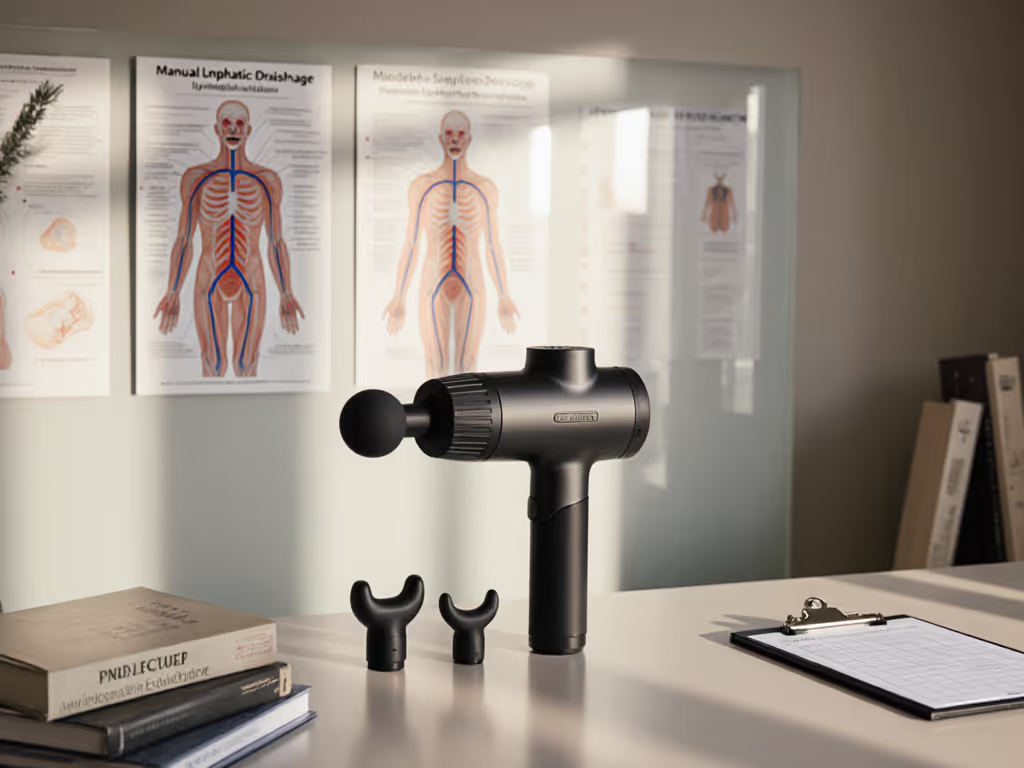
Attachment clarity: Too many heads confuse use. You need two: a dense foam head (general muscle work) and a softer mushroom or flat head (bony areas, glutes). Everything else is noise.
Integrating Proprioceptive Work Into Daily Routines
One-off protocols don't rebuild proprioception. Weekly patterns do. Here's how to anchor the work into existing routines:
Runner warm-up (5 min pre-run): Activate calves, glutes, hamstrings. Feel the leg engagement during your first mile improve immediately.
Lifter pre-session (3-5 min): Glute and quad activation before squats or deadlifts. You'll feel more muscular control and less compensation.
Deskworker micro-break (3 min, twice daily): Upper-back and shoulder activation between Zoom calls. Postural reset that lasts hours.
Pre-sleep protocol (5 min): Slow, bilateral work on legs and lower back. Proprioceptive input + parasympathetic calm = better sleep and next-morning tissue readiness.
Travel routine (2-3 min daily): Calf and glute maintenance in the hotel, preventing the stiffness that derails workouts and mobility on arrival.
The constraint is time and convenience. A protocol that demands 15 minutes or a special space won't survive. A 3-5 minute pattern that lives in your gym bag and runs on USB-C will.
Further Exploration and Sustained Practice
Proprioceptive reeducation isn't a one-time fix. It's a return to baseline sensitivity, and baseline drifts. The research confirms that spatial positioning recovery and sustained movement efficiency protocols require consistency over weeks and months. The gap between understanding proprioception and feeling its benefits narrows quickly (usually within 3-5 sessions), but the deepest gains come from treating this work like a weekly habit, not a novelty.
If you've experienced the fog of poor proprioception, that sense of disconnection from your own body, you already know its cost. The path back isn't expensive or time-consuming. It's quiet, portable, and USB-C. It disappears into your routine until you move, and then it becomes evident: your body knows where it is again.
Related Articles