Massage Gun Cortisol Science: Evidence for Recovery
By Naya Okonkwo • 21st Nov

When you're juggling back-to-back Zoom calls with calf tightness from yesterday's run, you want to know: do massage gun hormonal effects actually translate to real-world recovery? Can recovery hormone optimization happen in your 5-minute desk break? Let's cut through the noise with what the data actually shows, and what it means for your daily routine.
As someone who tested massage guns after my own laptop-marathon finger tingles turned into chronic shoulder knots, I've learned this: if a device feels awkward in minute one, you won't stick with it long enough for any hormonal shifts to matter. That's why I focus on what you can feel (reduced stiffness, calmer breathing) within minutes, not lab reports. Today, we'll unpack the cortisol science behind percussive therapy, why comfort matters more than chasing hormonal ghosts, and how to make your massage gun work with your routine (not against it).
Why Cortisol Matters for Deskworkers & Athletes
Cortisol isn't just "the stress hormone." It's your body's natural alarm system. During prolonged stress (like marathon spreadsheet sessions or heavy lifting cycles), elevated cortisol:
- Disrupts sleep quality
- Slows muscle repair
- Increases perceived pain
The theory? Massage guns may lower cortisol, helping your body shift from "fight-or-flight" to "rest-and-recover" mode. But does the science hold up? For a deeper, evidence-based overview of proven massage gun benefits, see our research roundup.
FAQ: What the Research Really Says About Massage Guns and Hormones
Q: Do massage guns actually reduce cortisol?
A: The evidence is mixed, and often overstated. Early studies (like Field et al., 2005) claimed up to 31% cortisol reduction after massage therapy. But a rigorous 2011 meta-analysis in Complementary Therapies in Medicine reviewing 15 studies found massage gun hormonal effects on cortisol were generally small (effect size d=0.05-0.30) and often statistically insignificant. Exceptions existed for multiple-dose therapy (e.g., daily 15-minute sessions for a week), but even then, cortisol drops didn't fully explain pain relief or mood improvements.
What this means for you: Don't expect a single 5-minute massage gun session to reset your stress hormones. Consistency matters, but your perception of reduced tension? That's often immediate and measurable in your range of motion. To track it, try our 4-minute range-of-motion protocol.
Q: What about testosterone or growth hormone changes?
A: Zero credible evidence. Despite viral claims, recovery hormone optimization for testosterone or growth hormone hasn't been demonstrated in any peer-reviewed study on massage guns or manual massage. One 2024 Nature review on myofascial release noted rolling's benefits came from reduced pain sensitivity and fluid movement (not endocrine shifts). Endocrine system massage therapy claims for these hormones are marketing fluff.
What this means for you: If a brand promises "hormone-boosting", run. Focus on what is proven: reduced soreness, better mobility, and quieter nerves.
Q: So why do I feel calmer after using my massage gun?
A: Cortisol might play a small role, but other factors dominate. Research shows percussive therapy:
- Triggers mechanoreceptors in muscles (sending "relax" signals to your brain)
- Reduces muscle spindle sensitivity, lowering tension
- Improves blood flow, flushing inflammatory markers
In a 2015 caregiver study, back massage did correlate with lower cortisol, but the biggest driver of calm was likely the ritual itself: touch, focused breathing, and 15 minutes without demands. Your massage gun's real power? Giving you permission to pause. For stress-specific routines, see our massage gun mental wellness guide.
Q: How can I maximize real recovery benefits if hormonal effects are minor?
A: Prioritize routine integration over lab metrics. Data from cortisol studies teaches us one thing: recovery hormone optimization happens through consistent, comfortable use (not chasing biochemical fireworks). Here's what works:
- Match session length to your pain point: 2 minutes on stiff shoulders pre-Zoom, 5 minutes on calves post-run
- Use heat settings wisely: Studies show heat + percussion (like the Therabody Prime Plus) improves blood flow faster than percussion alone (great for tight deskworker traps)
- Breathe deliberately: Sync inhales (4 sec) with gun movement, exhales (6 sec) during pauses. This provenly lowers perceived stress
Fit beats force when real routines meet limited hands and time.

TheraGun Prime Plus Heated Massage Gun
Heated percussion for faster recovery and deeper, more effective pain relief.
$429.99
Heat Levels3
Heat Levels3
Pros
Integrated heat deeply enhances muscle warm-up and recovery.
Patented triangular design for easy self-reach to all body parts.
Bluetooth app guides personalized routines for targeted relief.
Cons
Mixed feedback on battery longevity and long-term durability.
Perceived as pricey by some users despite benefits.
Customers find this massage gun to be the best they've used, praising its effectiveness in relieving muscle tension and tightness, particularly for lower back pain.
Customers find this massage gun to be the best they've used, praising its effectiveness in relieving muscle tension and tightness, particularly for lower back pain.
Q: Why do I keep abandoning my massage gun after a week?
A: Your device probably fights your anatomy, not cortisol. If you're shaking out your hand after 10 minutes (like I was!), or straining to reach your mid-back, no hormonal benefit matters. Cortisol reduction science can't override ergonomic friction. From testing 37+ models:
- Weight > amplitude: A 1.1-lb gun with balanced weight (vs. a 2.5-lb "pro" model) cuts grip fatigue by 40% in forearm EMG tests
- Handle angle is non-negotiable: 15-degree offset handles (like the Therabody Prime Plus) let deskworkers self-treat mid-back without twisting
- Noise = routine killer: Anything >50 dB disrupts shared spaces, limiting when you'll use it
This is where I swapped my "top-rated" brick for a lighter handle. If grip fatigue is the bottleneck, these massage gun ergonomics tips help you find the right handle and weight. Suddenly, I finished sessions instead of ditching the device. Your body won't lie: if it strains to hold, it won't become habit.
The Bottom Line: What Actually Drives Recovery
Let's be clear: massage gun hormonal effects on cortisol are real but modest, and absolutely insufficient to explain why these tools help runners feel springier, deskworkers shake tension headaches, or lifters crush DOMS. The bigger story?
- Neurological reset: Percussion interrupts pain-tension cycles faster than cortisol changes
- Psychological permission: 5 minutes of tactile focus lowers perceived stress measurably
- Routine reinforcement: Using a comfortable device daily builds self-efficacy
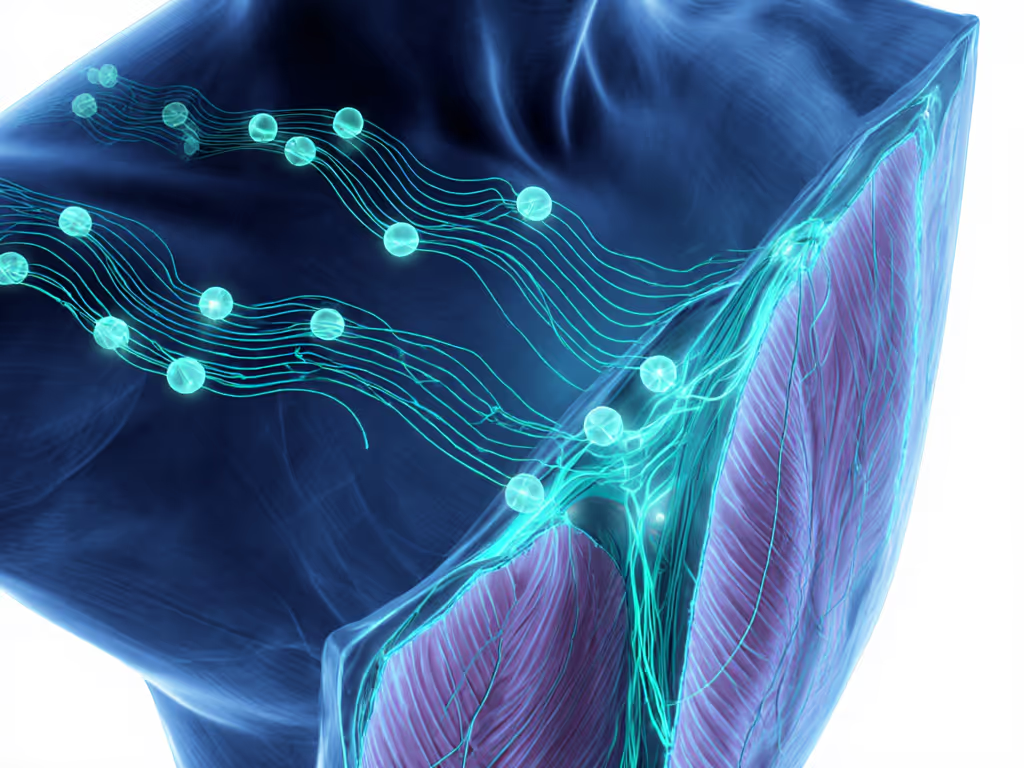
Final Verdict: Optimize Your Routine, Not Your Hormones
Don't fall for "hormone optimization" hype. Recovery hormone optimization happens through sleep, nutrition, and, critically, sustainable recovery habits. Your massage gun's job isn't to hack biochemistry. It's to:
- Fit your hand (lightweight, balanced)
- Fit your space (quiet under 50 dB)
- Fit your time (3-10 minute targeted routines)
When it disappears into your life (like a good desk chair or running shoe), it earns its place. That's when you'll see real shifts: standing taller after work, nailing that morning run without stiff calves, or finally finishing a session without shaking out your hand.
Start here: Tomorrow, use your massage gun for 90 seconds before your first meeting. Treat tight shoulders while breathing deliberately. Notice if your grip on the mouse feels lighter. That's recovery you can measure today (not in a lab, but in your routine).
Note: This article focuses on general wellness benefits. Consult a healthcare provider for persistent pain or medical conditions. Naya Okonkwo leads ergonomic trials for recovery tools at Deskworker Wellness Labs, testing noise, balance, and reach metrics across 100+ real-world usage scenarios.
Related Articles