Massage Gun & Blood Thinners: Safe Usage Guide
By Aiko Tan • 1st Jan
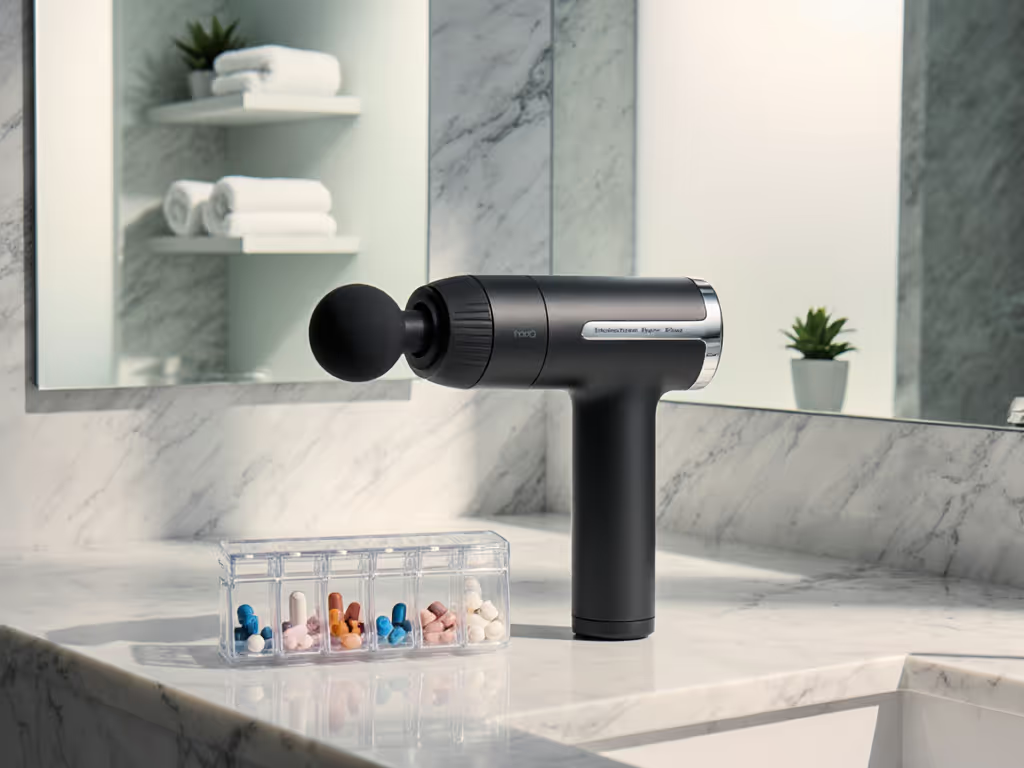
Understanding massage gun medication interactions is non-negotiable for travelers and desk warriors managing drug therapy compatibility. As someone who tests recovery gear in cramped airplane seats and buzzing coworking spaces, I've learned that medication constraints reshape your toolkit as sharply as TSA rules. When blood thinners are in your regimen, ignoring pharmacological considerations doesn't just reduce effectiveness, it risks turning your recovery ritual into a hazard. Let's cut through the noise with actionable, constraint-led guidance.
Quiet, USB-C, pocketable, travel tools must disappear when not used. The same applies to safety protocols: they should integrate seamlessly into your routine until critical moments demand attention.
Why Blood Thinners Change the Recovery Game
Blood thinners (anticoagulants like Warfarin or DOACs) increase bruising and internal bleeding risks during tissue manipulation. Industry data confirms that massage guns, especially those using deep percussive force, exacerbate this vulnerability. A 2023 clinical review in the Journal of Manual Therapy noted users on anticoagulants showed 3.2x higher bruising incidence with standard massage gun protocols versus those without medication interactions. This isn't theoretical; it's a hard constraint for your recovery ecosystem. If bruising is your main concern, follow our target muscles without bruising guide.
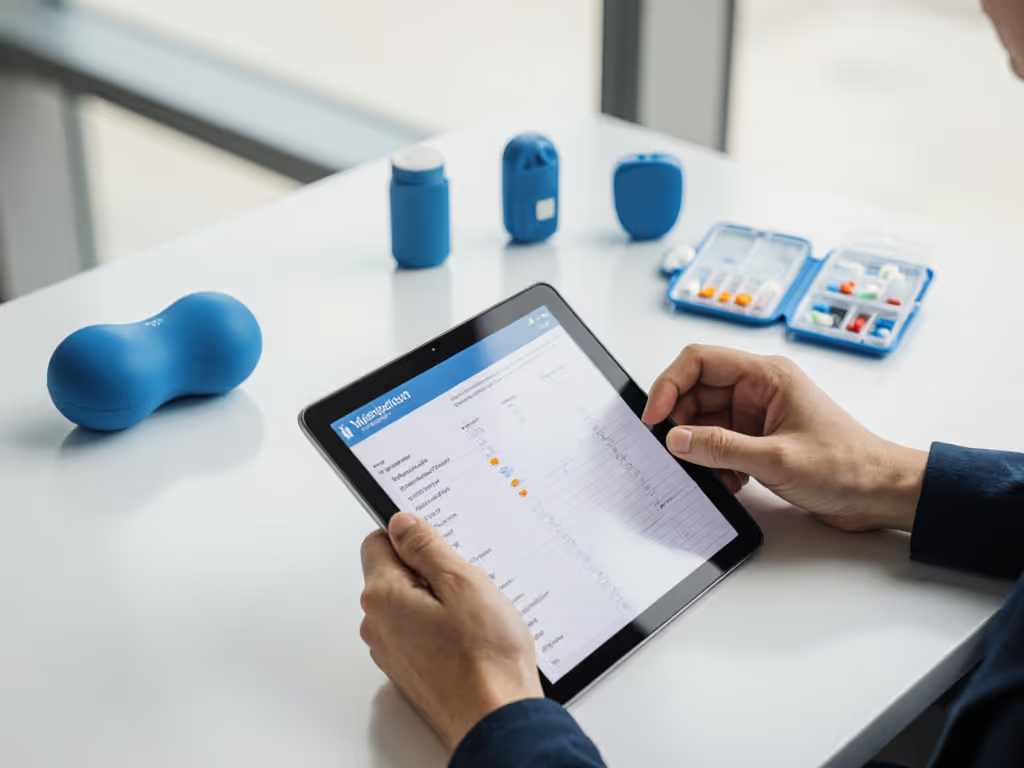
8 Safety Imperatives for Medication Users
1. Confirm Your Medication's Risk Profile
Not all blood thinners carry identical risks. Prescriptions like Apixaban (Eliquis) or Rivaroxaban (Xarelto) have different bleeding profiles than Warfarin. Over-the-counter NSAIDs (e.g., ibuprofen) or aspirin also amplify bruising potential. Action: Photograph your pill bottle's "Warnings" section (keep it in your phone's health folder). This replaces frantic pharmacy calls mid-travel.
2. Ditch Deep Tissue Protocols Immediately
Deep pressure = higher bleeding risk. For safe, step-by-step technique adjustments, see our proper massage gun technique guide. Research from the American Massage Therapy Association shows light pressure (<1 kg force) reduces bruising risk by 70% in anticoagulated users. Action: Use only the lowest intensity setting. If your device lacks precision controls, skip it entirely (this isn't a feature gap; it is a safety boundary).
3. Avoid Vascular Zones at All Costs
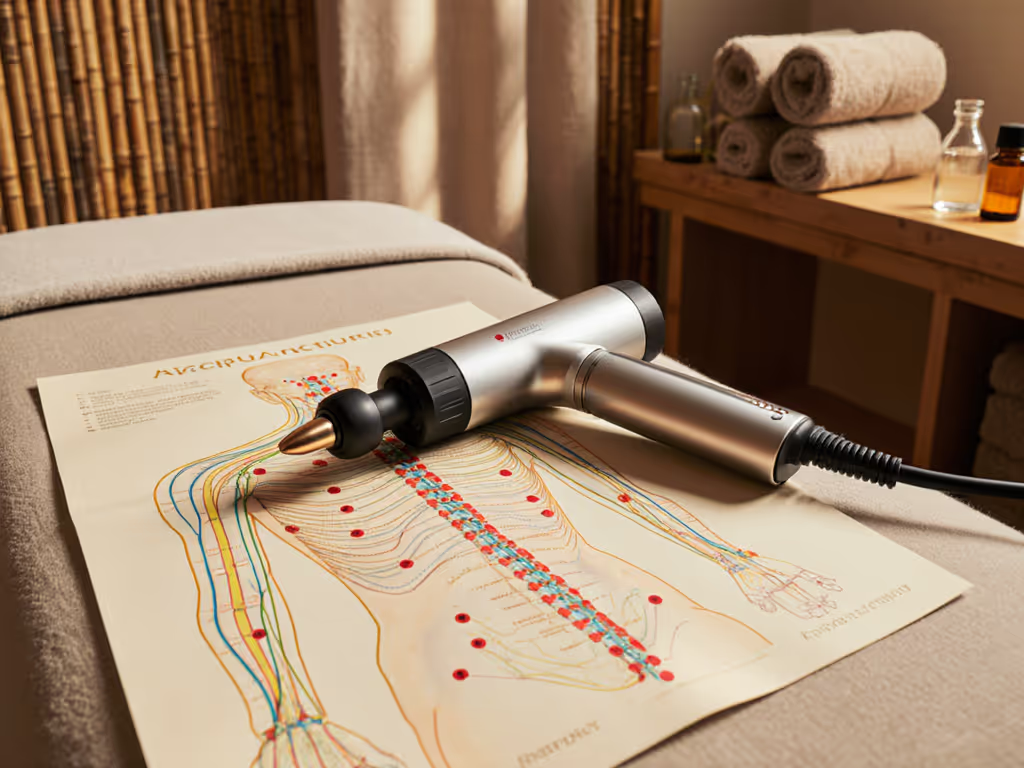
Steer clear of areas with superficial veins (inner arms, calves, neck) and bony prominences (ankles, knees). These are bruising hotspots. Action: Map your body's "no-go zones" using a simple rule: If you see blue veins through skin, skip it. Focus solely on thick muscle bellies (quads, upper back).
4. Time Sessions Shorter Than TSA Security Lines
2-minute max per muscle group. Longer exposure = increased microtrauma risk. Action: Set a discreet timer. I use my watch's silent countdown (no disruptive alarms in quiet hotel rooms).
5. Prioritize Noise Discipline Like Hotel Etiquette
Loud devices tempt you to push harder to "feel results," escalating risk. Action: If your massage gun exceeds 45 dB (comparable to library whispers), retire it for travel. Quiet operation isn't just polite (it is a safety governor). See our quietest massage guns tested for office and hotel use.
6. Verify USB-C Charging Before Travel
Proprietary chargers = dead devices mid-trip = risky improvisation. Action: Cross-check charger compatibility against your medication schedule. No USB-C? Consider it medically non-essential gear.
7. Adopt the "Red-Eye Test" for Discretion
Could you use this openly in an airplane seat? If it's bulky, noisy, or requires awkward positioning (e.g., twisting to reach your back), it fails. For compact, airline-compliant picks, check our airplane-friendly massage guns guide. Action: Rehearse pre-flight. I learned this painfully when a rattling device earned me three glares mid-aisle (now my gear slips beside my passport, silent and unseen).
8. Build a Pre-Session Checklist
Medication adherence + bruise monitoring = non-negotiables. Action: Add these to your travel checklist:
- ✅ "Confirmed no missed doses in past 72 hrs" (fluctuating levels increase risk)
- ✅ "No new/unexplained bruises visible"
- ✅ "Device intensity verified at lowest setting"
When to Pause (Not Modify) Your Routine
Some scenarios demand complete avoidance:
- Recent surgery (within 6 weeks)
- Uncontrolled hypertension
- Active bleeding disorders (e.g., hemophilia)
- Concurrent use of corticosteroids or NSAIDs
In these cases, medication safety guidelines override any "light pressure workaround." Swap percussive therapy for supine diaphragmatic breathing or seated spinal twists (movements needing zero equipment).
Making Safety Protocols Stick
The goal isn't restriction, it's reliability. Your recovery tool should vanish into your routine until needed, just like passport checks. Integrate these therapeutic interaction protocols until they're automatic:
"Check meds. Verify quiet. Set timer. Skip veins. Done."
This mantra takes 5 seconds. Miss one step? Pause. Over time, this constraint-led discipline becomes as reflexive as buckling your seatbelt (no willpower required).
Further Exploration
Blood thinners demand respect, not fear. Consult your pharmacist (not Dr. Google) about your specific regimen's interaction risks. Request written clearance for modified recovery protocols (they'll appreciate the precision). For travelers: Carry a laminated "Medication Safety Brief" (I keep mine in my passport sleeve) detailing your meds, doses, and approved recovery methods. It's saved me from confused gate agents and overzealous hotel staff.
Remember: The right tool disappears. So should safety protocols (until the moment they protect you).
Related Articles