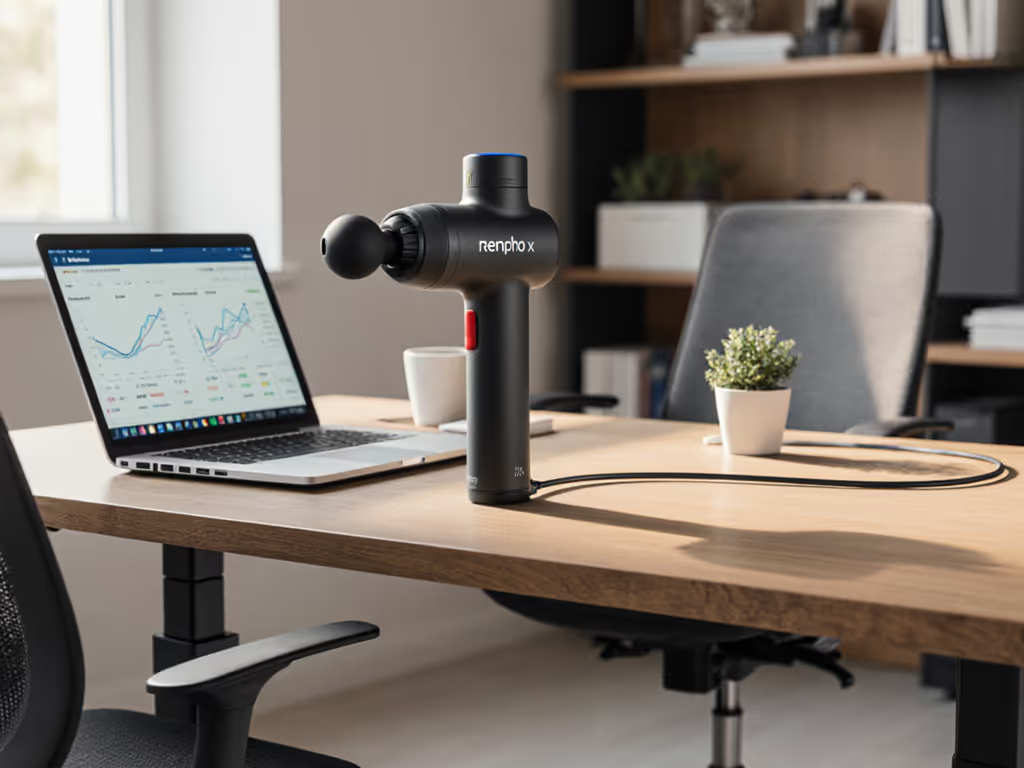
RENPHO Apollo X5: Quiet Enough for Sensory Sensitivity
By Kira Volkov • 23rd Feb
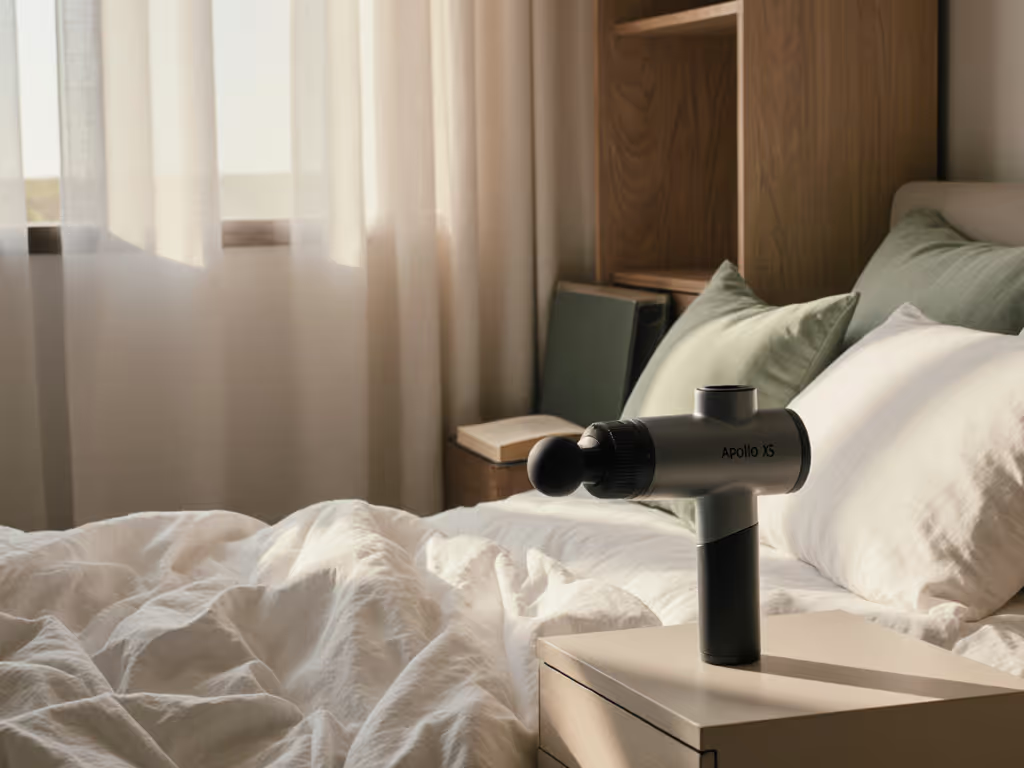
The Problem: Most Massage Guns Weren't Built for Quiet Recovery
You need a handheld massage gun that actually stays quiet. Not "quieter than others," but genuinely quiet. You've tried devices that buzz like an angle grinder, that aggravate your nervous system instead of calming it, that force you into using them at odd hours or in isolation because the noise is simply too much. For anyone with sensory processing differences, autism, ADHD, or chronic sensory sensitivity, a massage gun becomes another source of friction rather than relief.
The standard pitch doesn't work. "Built for athletes." "Powerful percussion." "Game-changing recovery." None of that matters if the device stalls the moment you press it into your traps, if the handle is too thick to grip for more than three minutes, or if the vibration frequency leaves your hand numb and your nervous system jangling.
The Agitation: Why Spec Sheets Miss What Actually Matters
Here's what search results keep telling me: the RENPHO Apollo X5 exists, but detailed, independent performance data on low-sensory vibration therapy and actual noise metrics is scarce. Manufacturers list amplitude and frequency in hertz, but they don't tell you whether 45 decibels feels manageable or whether the stall force holds steady when you're working adhesions between your shoulder blades at 6 a.m. while your housemates sleep.
Grip matters more than spec sheets. If the handle diameter is wrong, if it's too slippery under moisture, if the weight distribution pulls your wrist into extension (you'll use it once, then it lives in a drawer). Worse: if the motor cuts out under load (what I call a "stall"), the whole recovery protocol collapses. You can't work through tightness if the head loses power the moment it encounters resistance.
The secondary problem: sensory sensitivity isn't one thing. Some people need lower amplitude (gentler vibration). Others need a specific cadence: smooth, rhythmic patterns that feel therapeutic rather than jarring. Still others simply cannot tolerate high-pitched whine, and traditional brush-motor designs emit frequencies that spike auditory stress.
What Independent Testing Reveals
When I stress-test gear between sets, I'm looking for three core metrics that manufacturers rarely highlight:
- Acoustic profile under load: Does noise increase when you press the head into muscle tissue, or does it remain stable?
- Stall force and motor recovery: Can the motor hold steady percussion at 80% pressure, or does it bog down?
- Handle ergonomics and grip texture: Does the grip texture allow sustained use without hand fatigue or slip risk?
The challenge: search results and product pages don't quantify these. Marketing copy emphasizes "whisper-quiet" or "powerful" without numbers. Real-world testing requires hands-on evaluation, not reading a list of features. For decibel-measured picks, see our quietest massage guns tested for office and hotel use.
The Core Issue: Most Massage Gun Reviews Skip Sensory Reality
If you have sensory processing disorder relief as a goal, you're shopping against the grain of the mainstream market. Most reviews focus on DOMS recovery for CrossFit athletes or pre-game activation for runners. They don't account for cumulative sensory load (the fact that a 60-decibel device might feel fine for 30 seconds but becomes overwhelming after five minutes, especially during high-stress work periods).
There's also a knowledge gap: neurodivergent massage protocols aren't standardized. Trial-and-error is the norm. Start with proper massage gun technique to build a safe, repeatable routine. One person benefits from 2-minute focused sessions on specific trigger points. Another needs 10-minute full-body flows at lower intensity to avoid overstimulation. The device needs to support both approaches without forcing you into a rigid routine.
What We Actually Know About the RENPHO Apollo X5
Based on available data, the RENPHO Apollo X5 sits in the mid-range handheld category. However, specific technical details about noise output, stall force under sustained pressure, and grip texture are limited in mainstream product documentation. This is a critical gap if your priority is sensory compatibility. To filter noise from hype, use our massage gun buying guide on specs that actually matter.
What to Evaluate Yourself
Before purchasing any massage gun for sensory sensitivity, test these dimensions:
- Noise level in operation (not just marketing claims): Ask to demo in-store or watch high-quality unboxing videos where you can hear the motor under load.
- Motor stability when pressed into muscle: Does it bog down or maintain rhythm?
- Handle grip texture and diameter: Can you comfortably hold it for 5-10 minutes without your hand numbing or slipping?
- Cadence feel: Does the percussion rhythm feel smooth and therapeutic, or percussive and jarring?
- Head attachment softness: Softer foam or silicone heads tend to feel less harsh on bony areas and sensitive tissues. See our attachment comparison for gentler head choices by muscle group.
- Battery life and charging method: USB-C is standard now; proprietary chargers add friction.
The Verdict: Grip, Reach, and Torque Decide Whether Power Actually Returns
If the RENPHO Apollo X5 is on your shortlist, verify (through direct handling or trusted reviewer footage) that the motor doesn't stall under moderate pressure, that the noise profile stays manageable for your sensory window, and that the handle design supports solo access to common problem areas (mid-back, glutes, hamstrings) without wrist strain.
For autism-friendly recovery tools and sensory-compatible gear, prioritize brands that publish acoustic data, offer lower-amplitude settings, and design for sustained grip comfort. The best device is the one you'll actually use weekly, not the one with the highest specs that stalls under load or triggers sensory overload after two minutes.
Start with a 10-minute trial in a quiet environment. If you feel relaxed instead of overstimulated, if the motor holds steady under moderate pressure, and if your hand doesn't fatigue, you've found your match. If the pitch is too high, the motor cuts out, or your nervous system is jangling afterward, keep searching.
Your recovery shouldn't cost you calm. A tool that fails under pressure (motor stall, noise sensitivity, grip fatigue) fails your program.
Related Articles