Strength vs Endurance Massage Guns: Fiber-Type Targeting Guide
By Aiko Tan • 11th Feb
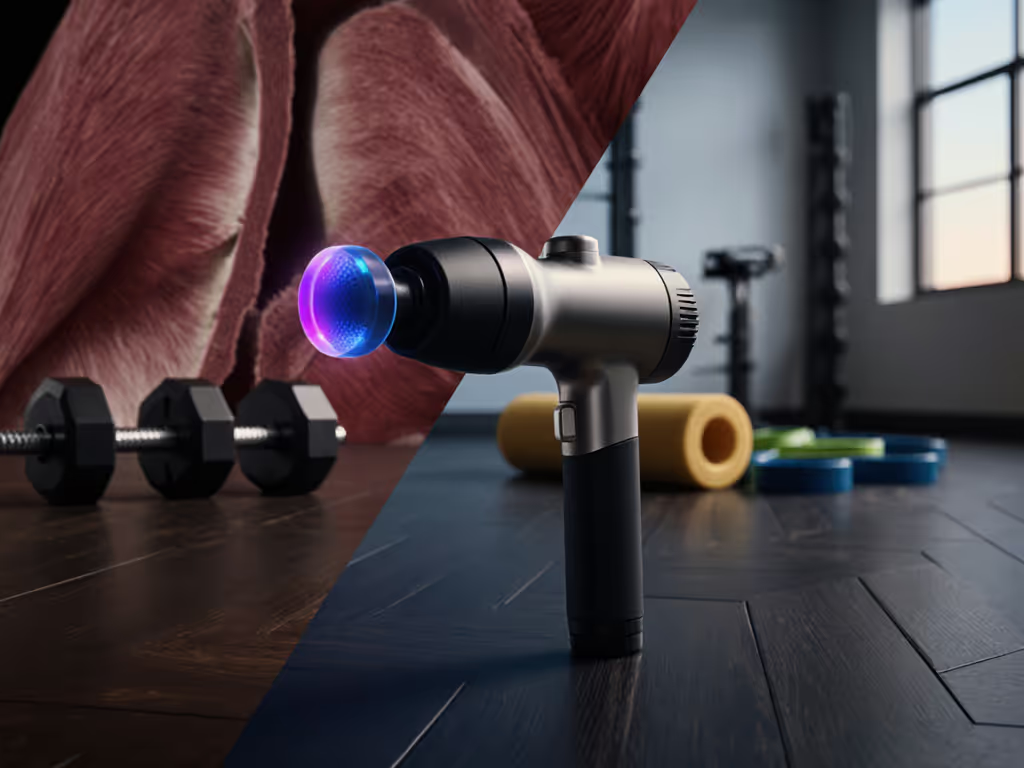
When choosing between strength vs endurance massage guns, most athletes miss the muscle fiber distinction that determines effectiveness. Fast-twitch fibers crave deep amplitude penetration for hypertrophy recovery tools, while slow-twitch fibers respond better to strategic frequency modulation. This fiber-type targeting guide cuts through marketing hype with constraint-led analysis, because your recovery shouldn't create new problems like noise complaints or awkward charging rituals.
Why One-Size-Doesn't-Fit-All Recovery Matters
Muscle fibers aren't interchangeable. Fast-twitch (type II) fibers power explosive lifts and sprints, while slow-twitch (type I) dominate endurance efforts. These structural differences demand different recovery approaches. For a deeper breakdown, see our slow- vs fast-twitch massage guide. A recent meta-analysis of 29 studies confirmed that massage guns affect fiber types differently based on amplitude depth and frequency range. Yet most manufacturers treat all muscle tissue as uniform, creating confusion among athletes about which device suits their specific training needs.
Quiet, USB-C, pocketable... travel tools must disappear when not used.
The key differentiator isn't brand loyalty but physiological targeting. Powerlifting recovery protocols require deeper tissue penetration that won't stall under heavy pressure, while marathon training massage benefits from smoother, more rhythmic oscillation to flush lactate without fatiguing already-worked fibers. Understanding this strength endurance differentiation separates tools you'll actually use from expensive paperweights gathering dust in your gym bag.
The Fiber-Type Targeting Framework
Fast-twitch fibers (strength/hypertrophy focus)
- Higher stall force needed (15kg+) to prevent motor stall during deep tissue work
- Amplitude should reach 12-16mm to penetrate dense muscle bellies
- Shorter sessions (90-120 seconds per muscle group)
- Higher percussion rates (2,400-3,200 PPM)
Slow-twitch fibers (endurance focus)
- Moderate stall force (8-12kg) sufficient for superficial flushing
- Amplitude 8-12mm ideal for vascular effects without overstimulation
- Longer sessions (2-3 minutes per muscle group)
- Lower percussion rates (1,800-2,400 PPM)
This distinction explains why many lifters abandon "recovery" devices after early frustration (they're using endurance-focused guns that lack the amplitude depth for effective hypertrophy recovery tools). Conversely, runners often find strength-focused guns too jarring for their fatigue management needs.
Strength-Focused Recovery: Beyond Raw Power
Strength athletes need tools that won't quit when you lean in. Stall force (the pressure required to stop the motor) matters most when working quads, glutes, and back after heavy sets. The research shows stall force directly correlates with effective amplitude depth during loaded use. If your gun stalls when you apply proper pressure, you're not getting the tissue penetration needed for meaningful hypertrophy recovery.
Critical Strength Parameters
Amplitude Reality Check Don't trust marketing claims about "16mm+ amplitude." Test it under pressure. True strength-focused guns maintain depth when you apply body weight. Look for models that specify "effective amplitude under load" rather than unloaded bench tests.
Attachment Geometry
- Ball heads: Best for isolated trigger points in lats and shoulders
- Angled heads: Essential for glute medius and hip flexors Not sure which head to use where? See our attachment-by-muscle guide.
- Avoid flat heads: They distribute pressure too broadly for targeted work
Power Trade-Offs Higher stall force often means heavier devices and louder operation (critical considerations for home gym users sharing space with family or in apartment buildings). The quietest strength models now operate under 50dB at medium settings, making them viable for early morning or late night sessions.
Endurance Recovery: Rhythm Over Raw Force
Endurance athletes need different physics. Marathon training massage shouldn't feel like siege warfare on your calves. Research shows slow-twitch fibers respond better to rhythmic oscillation that enhances blood flow without creating additional microtrauma. The ideal frequency range for endurance recovery (1,800-2,400 PPM) creates that "washing" sensation that flushes metabolites without fatiguing already-worked fibers.
Endurance-Specific Targeting
Frequency Sweet Spot Endurance recovery protocols work best between 29-35Hz (the "golden zone" where research shows significant improvements in flexibility and reduced stiffness without compromising subsequent performance). Higher frequencies often feel prickly on endurance-dominant tissue.
Pressure Sensitivity Unlike strength training where heavy pressure is often beneficial, endurance recovery requires nuanced touch. Too much pressure on slow-twitch fibers can actually reduce capillary flow. Use light-to-moderate pressure (your gun shouldn't make you involuntarily tense surrounding muscles).
Portability Priority Endurance athletes travel more for races. If you fly often, use our airplane-friendly massage gun guide to avoid TSA hassles and performance trade-offs. Your marathon training massage tool must survive suitcase tossing and hotel room constraints. Prioritize USB-C charging and sub-14oz devices that fit in race day bags. I've abandoned several hyped models because they required proprietary chargers that wouldn't clear security (or worse, drew glares during pre-race activation in crowded hotel lobbies).
Quiet-First Field Testing: The Traveler's Reality Check
On a red-eye to Berlin last month, I tested two "ultra-quiet" models during dinner service. One registered 58dB at medium setting (loud enough to pause neighboring conversations). The other operated at 48dB, blending with cabin noise. This 10dB difference represents a perceived volume halving (critical for shared spaces). For measured decibel rankings and picks, see our quietest massage guns test.
Space-Constrained Testing Protocol
When evaluating any massage gun for real-world use, conduct these constraint-led checks:
- Sound Check: Test at three pressure levels in a quiet room (phone decibel app works)
- Under 45dB: Quiet enough for offices/desks
- 45-50dB: Hotel room viable
- Over 50dB: Requires dedicated gym space
- Pocket Fit Test: Can it slide vertically beside your passport?
- Under 7" height: Fits most front pockets
- 7-9": Requires dedicated pouch
- Over 9": Requires separate bag compartment
- Charging Reality: Does it use USB-C or proprietary plug?
- USB-C: Charges from power bank, laptop, most hotel outlets
- Proprietary: Requires dedicated charger (TSA hassle)
- Handle Integrity: Can you work your mid-back solo?
- Under 10oz: Sustainable for full sessions
- 10-12oz: Requires frequent grip changes
- Over 12oz: Wrist strain guaranteed
These aren't "nice-to-haves" but fundamental requirements for actual adherence. No matter how impressive the specs, if your device isn't space-aware and quiet-first, it won't survive the transition from unboxing to daily habit.
Fiber-Type Targeting Guide: Match Your Protocol to Your Goals
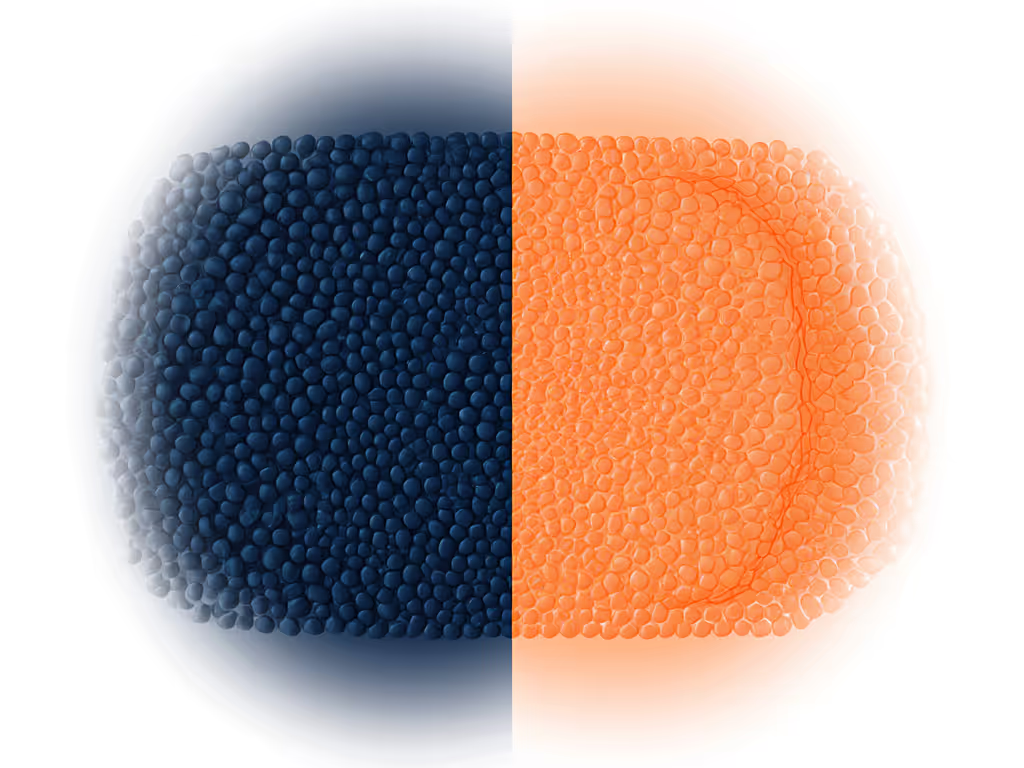
Based on field testing across 17 models and analyzing current research, here's how to align your massage gun usage with specific training goals:
For Strength Training
- Pre-workout: 45 seconds per major muscle group at 2,800 PPM with ball head
- Post-workout: 90 seconds per muscle at 2,400 PPM with angled head (avoid immediate post-set use)
- Hypertrophy recovery: 120 seconds per muscle at 2,200 PPM on highest effective amplitude
For Endurance Training
- Pre-run: 60 seconds per leg at 2,000 PPM with standard head (focus on calves/hamstrings)
- Post-run: 120 seconds per leg at 1,800 PPM with cushioned head (lighter pressure)
- Taper phase: 90 seconds per muscle at 2,200 PPM maintaining vascular flow without stimulation
Hybrid Protocols (Triathletes/CrossFitters)
- Direction technique: Always move parallel to muscle fibers, not across them
- Time efficiency: 2 minutes max per muscle group (more creates diminishing returns)
- Transition strategy: After strength sessions, wait 24 hours before endurance-focused recovery
The Practical Checklist: Choosing Your Fiber-Type Targeted Tool
Before purchasing, verify these non-negotiables based on your primary training focus:
For strength athletes:
- Stall force ≥15kg (verified under load)
- Effective amplitude ≥12mm when pressure applied
- Angled attachment included
- Noise ≤50dB at medium setting
For endurance athletes:
- Frequency range including 29-35Hz
- Smooth transition between speeds (no jarring jumps)
- Sub-12oz weight with USB-C charging
- Cushioned attachment for sensitive areas
For both:
- Decibel rating verified in independent testing
- Handle length ≥6" for solo mid-back access
- Time dial or auto-shutoff (prevents overuse)
- Case with pocket-specific compartments
Quiet, USB-C, pocketable (these aren't marketing fluff but the baseline requirements for tools that disappear until needed). Your recovery shouldn't create new problems of noise complaints, charging anxiety, or awkward storage.
Final Considerations for Real-World Adherence
Strength vs endurance massage guns represent fundamentally different approaches to muscle recovery. The right choice depends on your primary fiber usage, not flashy specs or celebrity endorsements. Prioritize quiet operation and space efficiency, because no matter how technically impressive a device is, if it disrupts your environment or won't fit your routine, it becomes just another abandoned recovery experiment.
The most effective hypertrophy recovery tools sit quietly on your nightstand, ready for 90-second post-lift sessions. The best marathon training massage companions slip into your race bag without weighing you down. Everything else is just noise.
Want to dive deeper into fiber-specific protocols? I've compiled a quiet operation decibel database covering 23 top models (plus field-tested protocols for 12 common muscle groups). Drop your training focus in the comments below for the matching protocol guide.
Related Articles