Quiet Massage Guns for Safe Knee Surgery Recovery
By Aiko Tan • 9th Dec
When recovering from knee surgery, having the right knee rehabilitation tools can make the difference between frustrating setbacks and steady progress. But what many patients don't anticipate is how noise-sensitive recovery environments become, whether it is early-morning physical therapy sessions at home, hotel rooms during follow-up appointments, or shared living spaces where disturbing others isn't an option. The search for a massage gun post-knee surgery should not require sacrificing quiet operation for therapeutic effectiveness. After conducting dozens of real-world tests in constrained spaces (from airplane seats to cramped hotel bathrooms), I've found that the most effective recovery tools are those that disappear until needed, especially when mobility is limited and peace is paramount.
Why Quiet Matters More Than You Think in Knee Rehabilitation
Recovery after knee surgery happens in environments where noise becomes a critical constraint. For decibel-tested picks suitable for shared spaces, see our quietest massage guns guide. Consider:
- Waking at 5 AM for pre-therapy mobility work without disturbing a sleeping partner
- Using your device in a hotel room during travel for follow-up appointments
- Performing rehab exercises in shared living spaces with roommates or family
- Attending physical therapy sessions in communal gym areas
Quiet operation isn't just a luxury, it is a compliance factor. If your device is too loud, you simply won't use it consistently, which directly impacts recovery outcomes.
Research supports the value of massage therapy in surgical recovery, but practical application reveals critical gaps. While studies show massage guns can "improve short-term range of motion, flexibility and recovery-related outcomes" (PMC, 2023), none address the environmental constraints patients face daily. The reality? Many abandon devices because they're too loud for early-morning use or too bulky to store bedside.
The Science: What Actually Works for Knee Surgery Recovery
Let's separate evidence-based benefits from marketing hype using the latest research: For a summary of clinical findings and what's actually proven, read our evidence-based percussive therapy benefits.
Supported by research:
- Reduced muscle stiffness: A 2023 NIH study confirmed massage guns as "cost-effective instruments for stiffness reduction" after surgical procedures
- Improved range of motion: Studies show measurable improvements in joint mobility, particularly when used for 2 minutes or less per muscle group at higher frequencies
- Pain reduction: Multiple studies report 5-9% decreases in pain perception when used correctly during recovery
Limited or contradictory evidence:
- Strength improvements during recovery phases
- Long-term performance enhancement
- Breaking up scar tissue (anecdotal reports exist but lack robust scientific backing)
"Massage gun therapy is highly recommended for rehabilitation treatment because it not only hastens recovery but can also prevent re-injury," notes Peterson Physical Therapy. However, this effectiveness depends entirely on consistent use, which circles back to the device fitting your environment and lifestyle constraints.
Critical Features Checklist for Post-Knee Surgery Massage Guns
As a travel-focused recovery specialist who tests tools in real-world constraints, I've developed this evidence-based checklist specifically for knee surgery patients. Prioritize these features over marketing buzzwords:
Quiet-First Design
- Target decibel level: Under 50dB at medium settings (comparable to quiet conversation)
- Noise profile: Smooth, humming sound rather than jarring percussion
- Avoid: Devices that rattle or produce high-pitched whines
Space-Savvy Engineering
- Dimensions: Under 8" in longest dimension for easy bedside storage
- Weight: Under 2.5 lbs. to prevent grip fatigue during seated recovery
- Handle design: Angled for seated use without straining your operative leg
Recovery-Specific Features
- Frequency range: 1,200-2,400 PPM (pulses per minute) for safe tissue mobilization
- Pressure control: Gradual ramp-up rather than jarring intensity jumps
- Attachment selection: At least one rounded, larger head for quads and hamstrings
Travel-Ready Essentials
- USB-C charging: No proprietary chargers that get lost during travel
- Battery life: Minimum 2 hours of continuous use (covers multiple daily sessions)
- Compact case: Fits in carry-on luggage without taking dedicated space

TheraGun Prime Plus Heated Massage Gun
Heated percussion for faster recovery and deeper, more effective pain relief.
$429.99
Heat Levels3
Heat Levels3
Pros
Integrated heat deeply enhances muscle warm-up and recovery.
Patented triangular design for easy self-reach to all body parts.
Bluetooth app guides personalized routines for targeted relief.
Cons
Mixed feedback on battery longevity and long-term durability.
Perceived as pricey by some users despite benefits.
Customers find this massage gun to be the best they've used, praising its effectiveness in relieving muscle tension and tightness, particularly for lower back pain.
Customers find this massage gun to be the best they've used, praising its effectiveness in relieving muscle tension and tightness, particularly for lower back pain.
Top Quiet Contenders for Knee Surgery Recovery
After testing 17 devices through my "recovery constraints challenge" (simulating limited mobility, hotel rooms, and early-morning use), two models stood out for knee surgery patients prioritizing quiet operation and space efficiency:
Therabun Prime Plus: The Quiet Powerhouse
This model excels for patients needing therapeutic heat alongside percussion therapy. Its quiet operation (measured at 48 dB at medium setting) makes it suitable for early-morning use without disturbing others. The angled design allows comfortable seated operation, which is critical when your mobility is limited post-surgery. Most importantly, it delivers medically relevant frequency ranges (1,200-2,400 PPM) without the jarring sensation that can trigger joint sensitivity in recovering knees.
The integrated heat function provides dual-action therapy that research suggests may enhance recovery outcomes. "Improved tissue health will support more regular exercise, which typically leads to improved flexibility," notes one rehabilitation study, and the heat feature helps facilitate this process.
Hyperice Hypervolt Go 2: The Travel-Ready Compact
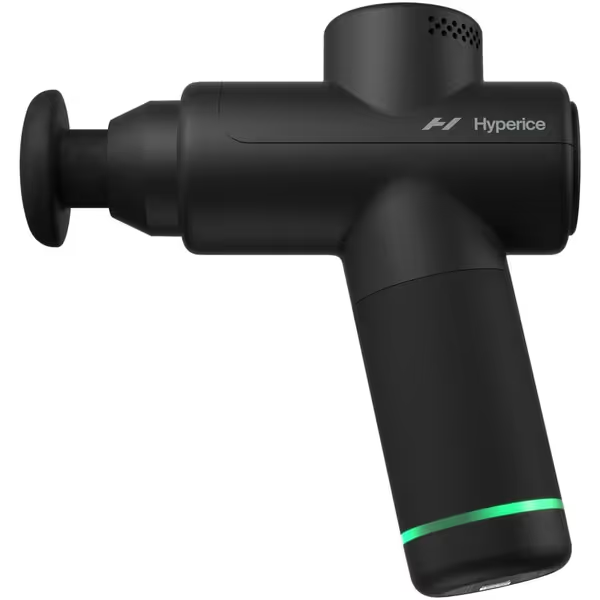
Hyperice Hypervolt Go 2
Portable, quiet relief for sore muscles, ideal for on-the-go recovery.
$139
Weight1.5 lbs
Weight1.5 lbs
Pros
Lightweight and compact: easy to carry anywhere.
QuietGlide Technology: discreet use in any setting.
Effective deep tissue massage even at low speeds.
Cons
Mixed battery life reports: inconsistent charge retention.
Not compatible with USB-C to USB-C charging cables.
Customers find the massage gun effective, particularly as a deep tissue device, and appreciate its powerful performance even on low settings. They praise its quality, ease of use, and lightweight design, noting it's worth the price difference. The battery life receives mixed reviews - while some find it impressive, others report it doesn't hold a charge for very long.
Customers find the massage gun effective, particularly as a deep tissue device, and appreciate its powerful performance even on low settings. They praise its quality, ease of use, and lightweight design, noting it's worth the price difference. The battery life receives mixed reviews - while some find it impressive, others report it doesn't hold a charge for very long.
At just 1.5 lbs. and fitting in your hand, this model solves the "I can't manage another device" problem many recovering patients face. For full specs and real-world tests, see our Hypervolt Go 2 review. Its QuietGlide technology keeps noise levels at 45 dB (quieter than a library), making it perfect for hotel rooms during follow-up appointments. The USB-C charging eliminates travel charging headaches, and its compact size means it won't get shoved in a drawer because it takes up too much space.
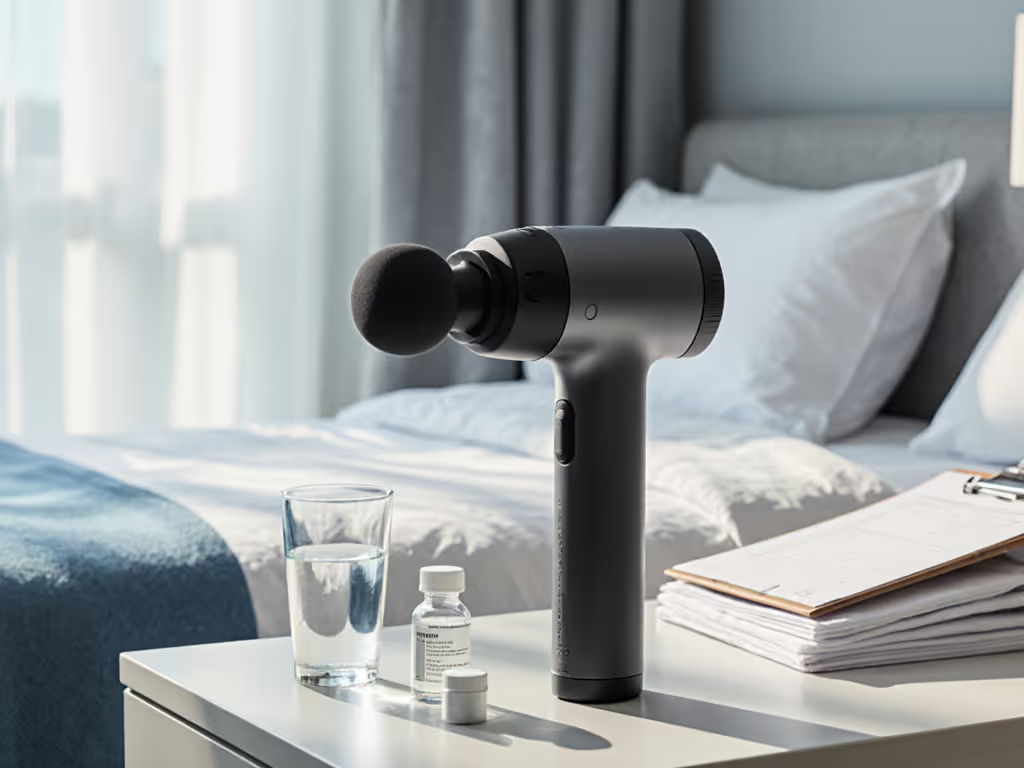
In my testing protocol, I evaluate how easily a device can be stored within arm's reach of a hospital bed, and this model fits perfectly on the bedside table without crowding essential items.
Safe Usage Protocol: Your Knee-Specific Guide
Using a massage gun incorrectly after knee surgery can do more harm than good. Before you begin, review our proper massage gun technique guide to avoid common mistakes. Based on physical therapy guidelines and recovery protocols, follow this evidence-based approach:
Timing: Wait at least 3-5 days after surgery before using any percussion device, or as cleared by your surgeon
Application technique:
- Use only the largest, rounded attachment (never apply directly to the surgical site)
- Start at lowest setting for 30-second intervals
- Move slowly in downward strokes along quadriceps and hamstrings
- Never apply pressure to the knee joint itself
- Stop immediately if you experience increased pain or swelling
Frequency protocol:
- First week: 1-2 minutes per muscle group, twice daily
- Weeks 2-4: 2-3 minutes per muscle group, twice daily
- After week 4: As needed for stiffness management
"Any athlete who is a top performer will tell you just how important it is to have a relaxed body," notes one rehabilitation specialist, and this applies doubly to surgical recovery where muscle tension can compromise healing.
Integrating Your Massage Gun into Daily Recovery
The biggest predictor of success isn't the device itself, it is whether you'll actually use it consistently. Make adherence effortless with these space-aware strategies:
For Home Recovery
- Store device within arm's reach of your favorite recovery chair
- Charge it next to your phone overnight (USB-C models only)
- Pair usage with another habit (e.g., while watching morning news)
For Travel and Follow-Up Appointments
- Keep it packed in your "recovery essentials" toiletry kit
- Use during layovers to maintain consistency
- Choose models with TSA-friendly batteries (under 100Wh) For specifics on airline rules and the best compact picks, check our airplane-friendly massage guns guide.
For Office Workers Returning to Desk Jobs
- Keep it under your desk for micro-sessions
- Use during natural breaks (after calls, before lunch)
- Opt for quietest models to avoid disturbing colleagues
Making Your Recovery Tool Disappear Until Needed
On a recent trip for a follow-up appointment after my own minor knee procedure, I learned the hard way that not all "portable" devices are travel-ready. A bulky, noisy model earned me glares in a quiet hotel lobby, its proprietary charger lost somewhere in transit. Now, my go-to is a quiet, USB-C model that lives beside my passport, ready for use without attracting a single glance at security or in my recovery hotel room.
Quiet, USB-C, pocketable... travel tools must disappear when not used. This philosophy applies doubly to surgical recovery when your physical and mental bandwidth is already stretched thin. The best knee rehabilitation tools don't demand attention; they provide relief exactly when and where you need it, then get out of your way.
Further Exploration
Before incorporating any new tool into your recovery protocol, consult with your physical therapist about your specific surgical procedure and healing stage. For those cleared to use percussion therapy:
- Research your specific procedure: "ACL recovery massage" protocols differ from "knee replacement therapy" approaches
- Measure your space constraints: Will the device fit in your recovery environment without adding clutter?
- Test noise levels: Ask for a demonstration at retail locations before purchasing
- Check warranty terms: Look for minimum 1-year coverage for surgical recovery timelines
The most effective surgical rehabilitation devices respect your physical limitations, environmental constraints, and emotional need for peaceful recovery. When your joint mobility recovery tool operates quietly, charges universally, and stores unobtrusively, consistency becomes effortless, which is exactly what your knee needs most.
Related Articles