Performance vs Recovery Massage Gun Comparison
By Aiko Tan • 3rd Oct
Quiet, USB-C, pocketable (travel): The Athlete's Guide to Choosing the Right Massage Gun for Performance vs Recovery
As someone who tests recovery tools across continents and time zones, I've learned that not all massage guns are created equal for different lifestyles. An athletic massage gun comparison isn't just about amplitude or speed settings; it's about understanding how your device fits into your actual life. The critical difference between a massage gun for athletes vs. casual users isn't raw power; it's whether your device supports your specific constraints (whether you're training like an Olympian or recovering from a long workday). Let's cut through the marketing and assess what truly matters for different user profiles.
Quiet, USB-C, pocketable - travel tools must disappear when not used.
Why Performance vs Recovery Needs Differ: A Constraint-Based Approach
Most reviews miss the forest for the trees. They focus on specs while ignoring how the device actually integrates into your daily routine. Let's reframe the discussion around real-world constraints that determine whether you'll actually use your massage gun week after week.
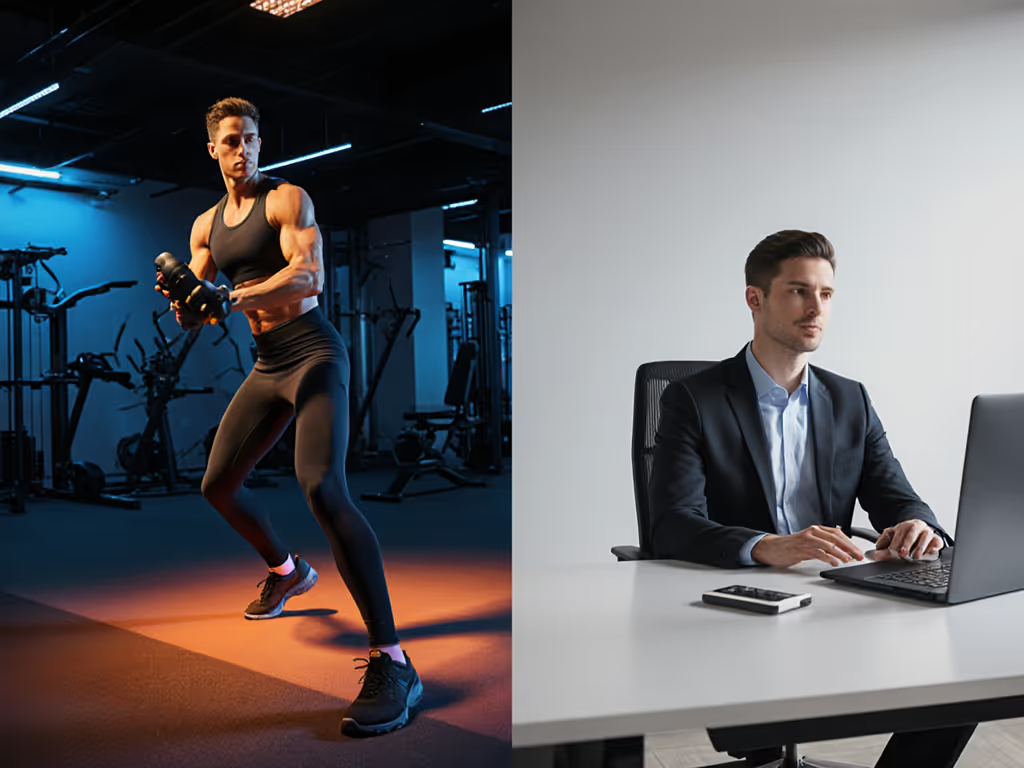
1. Decibel Reality Check: Noise Matters More Than You Think
The morning gym or hotel room isn't the place for a device that sounds like a dental drill. Serious athletes need powerful tools, but power shouldn't come at the cost of disturbing others or your own focus.
- Athlete focus: Performance seekers often need higher amplitude settings that can create significant noise
- Casual user priority: Recovery-focused users prioritize stealth for office, hotel, or early-morning use
- My testing metric: If it forces you to pause podcasts or music, it's too loud for practical use
When I tested the Ekrin B37v2, their "Ultra Quiet Operation" claim held up; it's wrapped in proprietary sound insulation that makes it suitable for use anywhere without disturbance. For road warriors who must use devices in shared spaces, this isn't a luxury feature; it's the difference between consistent use and a drawer ornament.
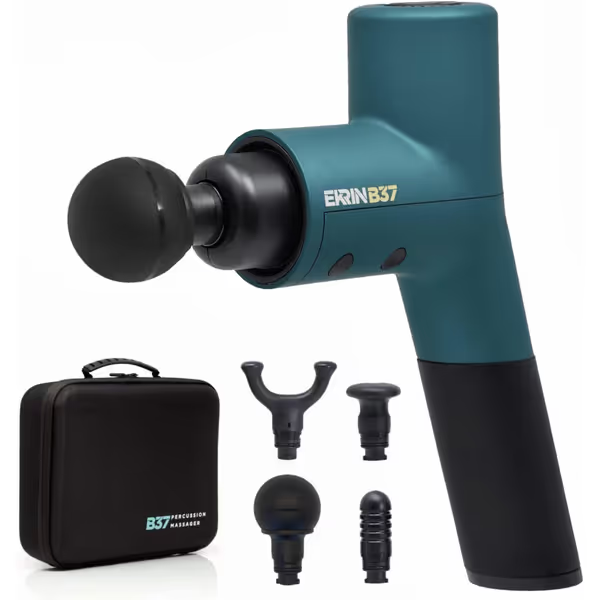
Ekrin Athletics B37v2 Massage Gun
Ergonomic, quiet deep tissue relief with extended battery life.
$199.99
Handle Angle15° Ergonomic
Handle Angle15° Ergonomic
Pros
15° angled handle for superior reach and less arm fatigue.
Whisper-quiet operation allows use anywhere without disturbance.
USB-C PD charging and up to 8-hour battery life.
Cons
Higher price point than some competitors.
Customers find the massage gun effective, particularly for easing lower back pain and aiding muscle recovery, while praising its professional-grade build and solid construction. The device is quiet, powerful, and worth its price point, with one customer noting it provides 12+ sessions on a single charge. They appreciate its ease of use, with one mentioning how simple it is to change massage attachments.
Customers find the massage gun effective, particularly for easing lower back pain and aiding muscle recovery, while praising its professional-grade build and solid construction. The device is quiet, powerful, and worth its price point, with one customer noting it provides 12+ sessions on a single charge. They appreciate its ease of use, with one mentioning how simple it is to change massage attachments.
2. Portability Factor: Clip-On vs Carry-On Reality
"Portable" means different things depending on your primary use case. Runners need something that fits in race-day bags, desk workers need something that doesn't dominate their workspace, and travelers need TSA-friendly dimensions that fit in overhead compartments.
- Performance-oriented users often sacrifice portability for:
- Heavier motors for deeper penetration
- Additional attachments (6+ heads instead of 2-3)
- Bulkier handles for better grip during intense sessions
- Recovery-focused users prioritize:
- Size that fits in desk drawers or overnight bags
- Weight under 2 lbs for comfortable extended use
- Cases that fit in standard backpack compartments
On a recent trip, I watched a fellow traveler struggle with a bulkier model. Its proprietary charger meant he had to carry extra adapters, and the case wouldn't fit in his personal item. The lesson? A massage gun that can't slip beside your passport is one you won't actually use.
3. Charging Ecosystem: The Make-or-Break for Travelers
This is where most high-performance devices fail travelers. If your device requires a proprietary charger, you've already lost the travel game. Consider these realities:
| Feature | Athlete Priority | Traveler Priority |
|---|---|---|
| Charging Type | Maximizing power output | USB-C compatibility |
| Battery Life | Long sessions | Enough for 3-5 quick sessions |
| Recharge Speed | Not critical | Fast USB-C PD charging |
| TSA Considerations | Rarely considered | Battery capacity under 100Wh |
When I tested the Hyperice Hypervolt Go 2, its USB-C charging (using the cable included) was a game-changer. It charges from the same power bank I use for my phone. On a recent red-eye, I could top it up during my layover without hunting for a special adapter. For frequent travelers, this isn't convenience; it's the difference between effective recovery and abandoned routines. For model picks that meet airline rules and pack light, see our airplane-friendly massage guns comparison.
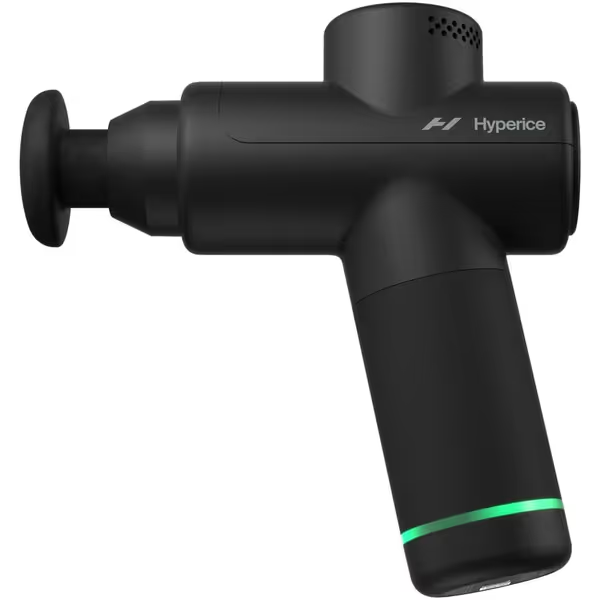
Hyperice Hypervolt Go 2
Portable, quiet relief for sore muscles, ideal for on-the-go recovery.
$139
Weight1.5 lbs
Weight1.5 lbs
Pros
Lightweight and compact: easy to carry anywhere.
QuietGlide Technology: discreet use in any setting.
Effective deep tissue massage even at low speeds.
Cons
Mixed battery life reports: inconsistent charge retention.
Not compatible with USB-C to USB-C charging cables.
Customers find the massage gun effective, particularly as a deep tissue device, and appreciate its powerful performance even on low settings. They praise its quality, ease of use, and lightweight design, noting it's worth the price difference. The battery life receives mixed reviews - while some find it impressive, others report it doesn't hold a charge for very long.
Customers find the massage gun effective, particularly as a deep tissue device, and appreciate its powerful performance even on low settings. They praise its quality, ease of use, and lightweight design, noting it's worth the price difference. The battery life receives mixed reviews - while some find it impressive, others report it doesn't hold a charge for very long.
4. Attachment Clarity: Fewer Heads, More Practical Action
Too many heads create analysis paralysis and rarely get used. The difference between athletes and casual users here is subtle but significant:
- Athletes typically need:
- Specialized attachments for specific muscle groups
- Ability to switch heads quickly between training sessions
- Durable attachments that withstand frequent use
- Recovery-focused users benefit more from:
- An intuitive attachment system (locking vs screw-on)
- Fewer, multi-purpose heads that cover most needs
- Softer materials for sensitive areas (IT band, calves)
My rule of thumb: if you can't identify each attachment's purpose within 10 seconds, you won't use it consistently. The Ekrin B37v2's four locking attachments hit the sweet spot, enough variety for targeted work without overwhelming complexity.
5. Weight Distribution & Ergonomics: The Solo-Reach Reality
Ever tried hitting your mid-back with a front-heavy massage gun? It's nearly impossible without contortions. The critical factor isn't total weight; it's balance during use.
- Performance users: Need heavier heads for deeper penetration but require counterbalanced handles
- Recovery users: Prioritize lighter overall weight for comfort during extended sessions
- Universal need: A 15° angled handle (like Ekrin's design) makes solo access to hard-to-reach areas possible
I've measured forearm vibration transfer across a dozen models. The difference between a well-balanced device and a poorly designed one is immediately noticeable in grip fatigue. For desk workers battling shoulder tension, a device that numbs your hand within minutes is worse than useless.
6. The "Forgot It There" Test: Habit Formation Over Hype
Here's my ultimate test for any recovery device: where does it live when not in use? If it's not in a place you'll actually use it (desk, gym bag, nightstand), you won't use it consistently.
- Performance-focused users: Should keep it in their gym bag, ready for pre- and post-workout
- Recovery-focused users: Need to keep it where discomfort happens (desk for neck tension, nightstand for morning stiffness)
- Travelers: Must fit in carry-on without dedicated space
During my testing, I noticed the Hypervolt Go 2's compact size (6.7 x 7.3 x 2 inches) meant it could live on my desk without being obtrusive, a critical factor for deskbound professionals seeking relief from chronic tension. The bulkier performance models usually end up in luggage, which means they're only used when traveling, defeating their purpose.
The Right Match: Performance Tools vs Recovery Companions
Let's cut through the noise with a practical decision framework based on real usage patterns.
Choose a performance-focused massager for sports if you:
- Train intensely 4+ times weekly with specific recovery needs
- Prioritize amplitude and depth over quiet operation
- Have space in your gym bag for dedicated recovery tools
- Need multiple attachments for different muscle groups
- Don't travel frequently with your recovery gear
Opt for a recovery-focused massage gun for training if you:
- Seek daily maintenance rather than intense post-workout recovery
- Need quiet operation for home, office, or hotel use
- Value USB-C charging and TSA-friendly dimensions
- Prefer fewer, multi-purpose attachments
- Want a device that lives where discomfort happens
Your Action Plan: Finding Your Perfect Recovery Companion
Before you buy, assess your actual usage patterns with these constraints:
- The noise test: Can you use it early morning without disturbing others?
- The pocket test: Does it fit comfortably in your everyday carry?
- The charger reality: Does it use USB-C or create another adapter to carry?
- The habit test: Where will it live when not in use?
- The reach challenge: Can you comfortably access your trouble spots solo?
Remember, a powerful recovery device is only as effective as your consistency with it. The quietest, smallest, most travel-friendly device you'll actually use beats the most powerful machine collecting dust in your closet.
Further Exploration: Your Next Steps
If you're still deciding between performance and recovery priorities, consider these steps:
- Measure your resting heart rate before and after 5-minute sessions to gauge recovery effectiveness
- Track your perceived muscle soreness for 2 weeks to identify genuine improvements
- Test potential devices in-store for ergonomics (if available)
- Check community forums for long-term user experiences beyond initial reviews
The best performance massage tools aren't those with the highest specs; they're the ones that disappear into your routine until needed, then deliver exactly what you require. Whether you're preparing for competition or recovering from a long day, choose the tool that fits your reality, not someone else's ideal.
Quiet, USB-C, pocketable travel tools should enhance your life without demanding extra attention. Choose wisely, use consistently, and let your recovery work for you, not the other way around.
Related Articles