Massage Gun for Dancers: Comparing Ballet, Contemporary, Hip-Hop
By Aiko Tan • 10th May
Introduction
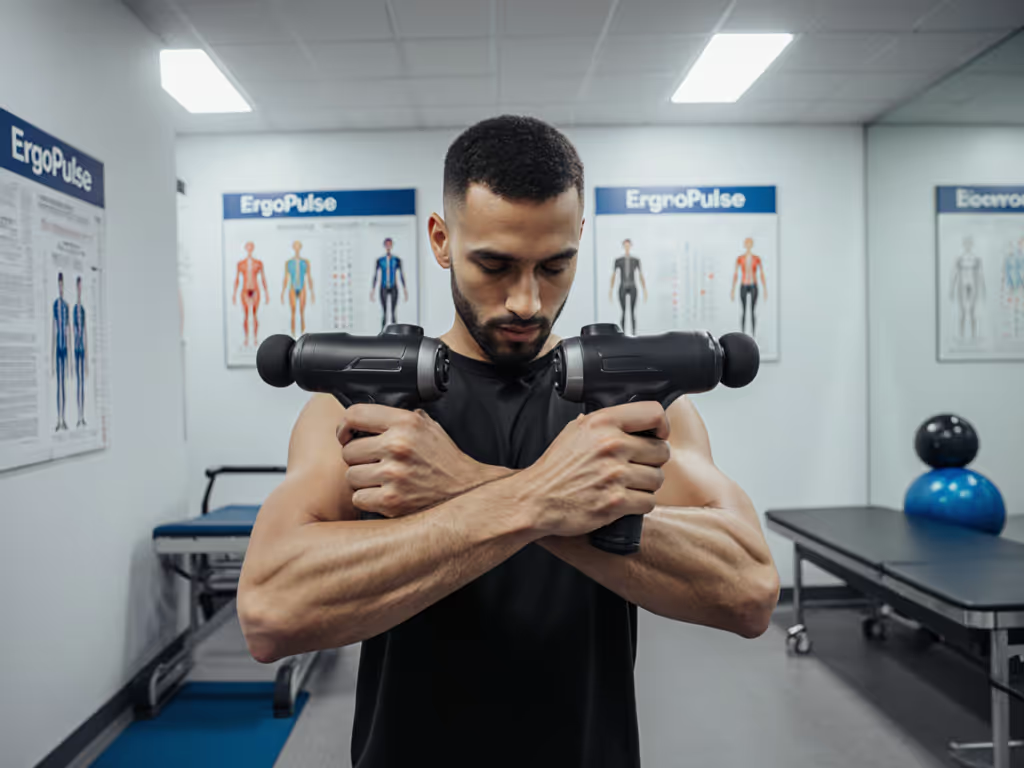
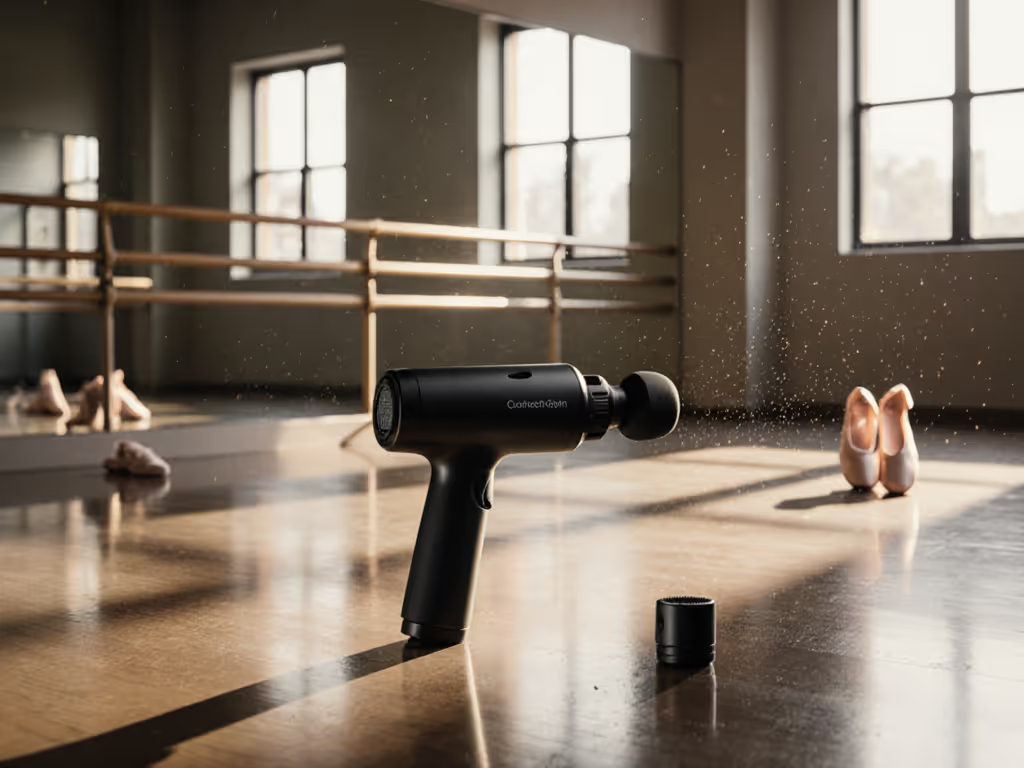
A massage gun for dancers addresses a precise recovery gap: repetitive, style-specific muscle demands that generic fitness tools don't solve. But not all percussion devices suit all dancers. Dance style recovery comparison matters: ballet demands different tissue engagement than hip-hop, and contemporary sits in a nuanced middle. The right tool should be quiet enough for pre-dawn studio warm-ups, compact enough to toss into a rehearsal bag, and charged via USB-C so you're never hunting for a proprietary cable in a green room.
Quiet, USB-C, pocketable... recovery tools must disappear when not used.
This guide cuts through the noise (literal and marketing) to show you how to match percussion protocol to your dance form.
Why Dancers Need a Different Recovery Strategy
Dancers face a recovery paradox: high-impact, high-frequency muscle work without the rest windows of traditional sports. A ballet dancer trains on the balls of the feet for 4-6 hours daily; a hip-hop freestyle session combines explosive bursts with near-zero recovery between sets; contemporary blends slow-flow extensibility with sudden weight transfers. Generic massage-gun advice like "use on quads and calves for 30 seconds each" misses the cumulative, style-specific pattern of tightness and microtrauma.
Percussion therapy (at the right amplitude and rhythm) accelerates blood flow to taxed tissue, reduces delayed-onset soreness, and preps muscle for the next session. But the wrong tool (one that's too loud for studio corners, weighs too much after holding turnout positions, or charges with a proprietary plug) becomes an abandoned drawer item, not a habit.
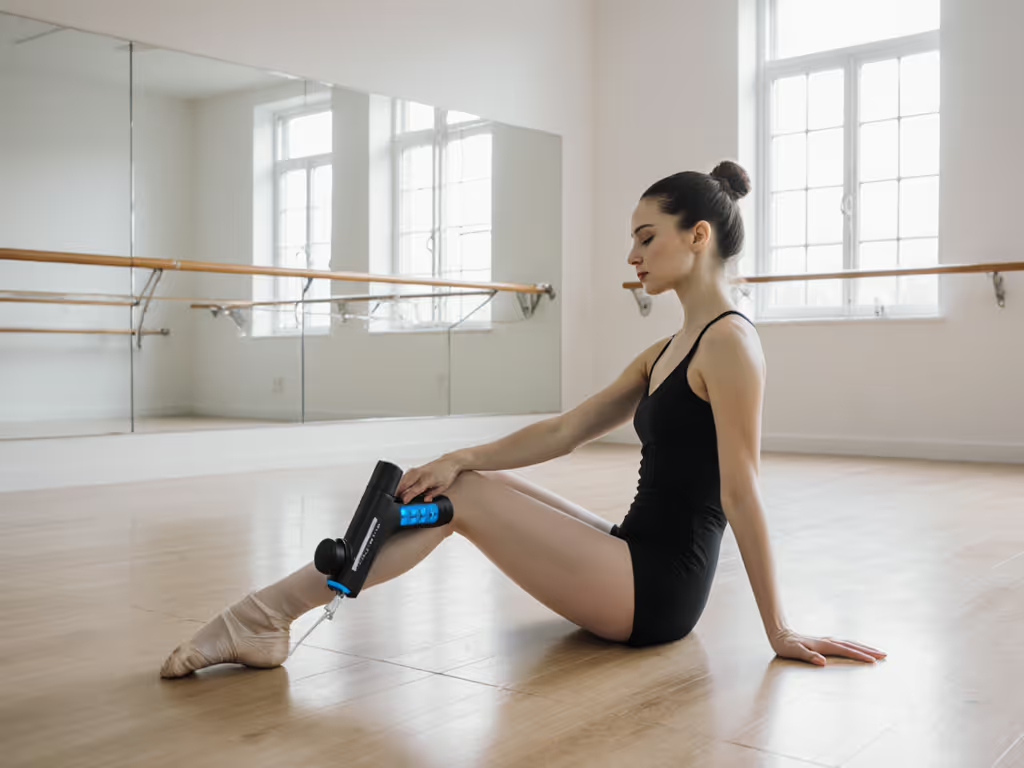
Ballet Dancer Muscle Therapy
The Recovery Challenge: Ballet concentrates repetitive load on the forefoot, ankle complex, hip flexors, and lower back. Turnout is passive; the consequences are chronic, low-level inflammation in the hip and posterior chain. Dancers often present with tight IT bands, calf adhesions, and thoracic stiffness from postural demands. To avoid overworking small stabilizers, review our safe massage gun technique guide.
Key Target Areas:
- Arches and plantar fascia (high load, small surface area)
- Calf and soleus (sustained plantarflex tension)
- Hip flexors and deep glutes (active turnout muscle)
- Erector spinae and thoracic extensors (postural stabilization)
- Inner thighs (adductor tightness from parallel and turnout positions)
Percussion Prescription for Ballet:
- Amplitude: Moderate (0.3-0.5 inches). Deep amplitude can overstress already-stressed small stabilizers around the ankle.
- Frequency: 1,800-2,200 PPM (percussions per minute). Slower rhythm feels more soothing; rapid, high-frequency can trigger guarding in tight tissue.
- Duration: 2-3 minutes per muscle group. Ballet dancers benefit from longer dwell time; rapid passes miss deep adhesions.
- Pressure: Gentle to medium. Light, sustained contact over heavy, aggressive press.
Sample Protocol - Pre-Class Activation:
- Plantar fascia and arch (90 seconds, light pressure)
- Calf + soleus (2 minutes, medium)
- Deep glute (medial and lateral, 2 minutes)
- Hip flexor (supine or standing, 90 seconds)
Contemporary Dance Injury Prevention
The Recovery Challenge: Contemporary weaves sustained, low-load stretching (passive flexibility work) with sudden, explosive floor recovery and weight transfers. The tissue demand is dual: high elastic recoil requirement (springs, cartwheels, backward falls) combined with deep hip and spine mobility. Tight hip flexors and weak deep stabilizers are the injury precursor; so is IT band stiffness from asymmetrical floor weight.
Key Target Areas:
- Glutes (prime movers in floor work and hip extension)
- Hip abductors and external rotators (stability during weight shifts)
- Quadriceps and ITB (shock absorption during falls and landings)
- Serratus anterior and mid-back (stabilization during arm weight)
- Hamstrings and posterior chain (eccentric load during slow descent)
Percussion Prescription for Contemporary:
- Amplitude: Moderate to high (0.4-0.6 inches). Contemporary's dynamic range warrants deeper penetration.
- Frequency: 2,000-2,400 PPM. Medium-to-brisk rhythm supports both relaxation and activation.
- Duration: 2-3 minutes per group. Longer holds than hip-hop, shorter than ballet.
- Pressure: Medium to firm. Contemporary tissue often needs aggressive mobilization.
Sample Protocol - Post-Rehearsal Flush:
- Glute maximus and medius (2 minutes, firm pressure)
- ITB and vastus lateralis (90 seconds each side, steady)
- Serratus and mid-back (90 seconds, lighter, targeting lateral ribs)
- Hamstring (90 seconds, medium, emphasizing mid-belly)
Hip-Hop Recovery Protocols
The Recovery Challenge: Hip-hop is explosive: rapid weight shifts, ballistic hip action, vertical load on knees and ankles during freezes, and frequent stop-start cadence. Soreness is acute and localized: quads and glutes after a heavy freestyle session, ankles and calves after repeated freestyle pivots. Recovery is fast but incomplete; dancers often return to high-intensity training 24-48 hours later.
Key Target Areas:
- Quadriceps and VMO (vastus medialis obliquus; stabilizer during knee-bent pivots)
- Glutes (primary power for hip thrusts and explosive transitions)
- Calves and tibialis anterior (ankle dorsiflexion and plantarflex endurance)
- Hip abductors and TFL (tensor fasciae latae; hip stability during rotations)
- Erector spinae (rapid torso rotation stabilization)
Percussion Prescription for Hip-Hop:
- Amplitude: High (0.5-0.75+ inches). Deeper percussion reaches the quad vastus and glute layers faster.
- Frequency: 2,200-3,200 PPM. Rapid, aggressive rhythm energizes muscle and accelerates flush.
- Duration: 1-2 minutes per group. Quick, high-intensity passes.
- Pressure: Heavy. Hip-hop dancers tolerate and often prefer firm contact.
Sample Protocol - 24-Hour Turnaround Prep:
- Quadriceps (1.5 minutes, heavy pressure, focus VMO)
- Glute max and med (90 seconds, aggressive)
- Calves + tibialis (60 seconds each, rapid)
- Hip abductors and TFL (90 seconds, firm)
- Brief erector pass (60 seconds, stabilizing rhythm)
Comparative Checklist: Quiet, USB-C, Compact
Before committing to a recovery tool, run it against hard constraints, not marketing claims. I learned this on a red-eye flight: I tested a hyped device mid-aisle, and earned three glares. The charger was proprietary, the case was bulky, and it rattled the tray table at every percussive cycle. A quiet, USB-C model now slips beside my passport; I use it at the gate without attracting a single glance. The principle applies to dancers: your recovery tool should work into your routine, not demand special accommodation. For model picks tailored to ballet, contemporary, and hip-hop, see our best massage guns for dancers.
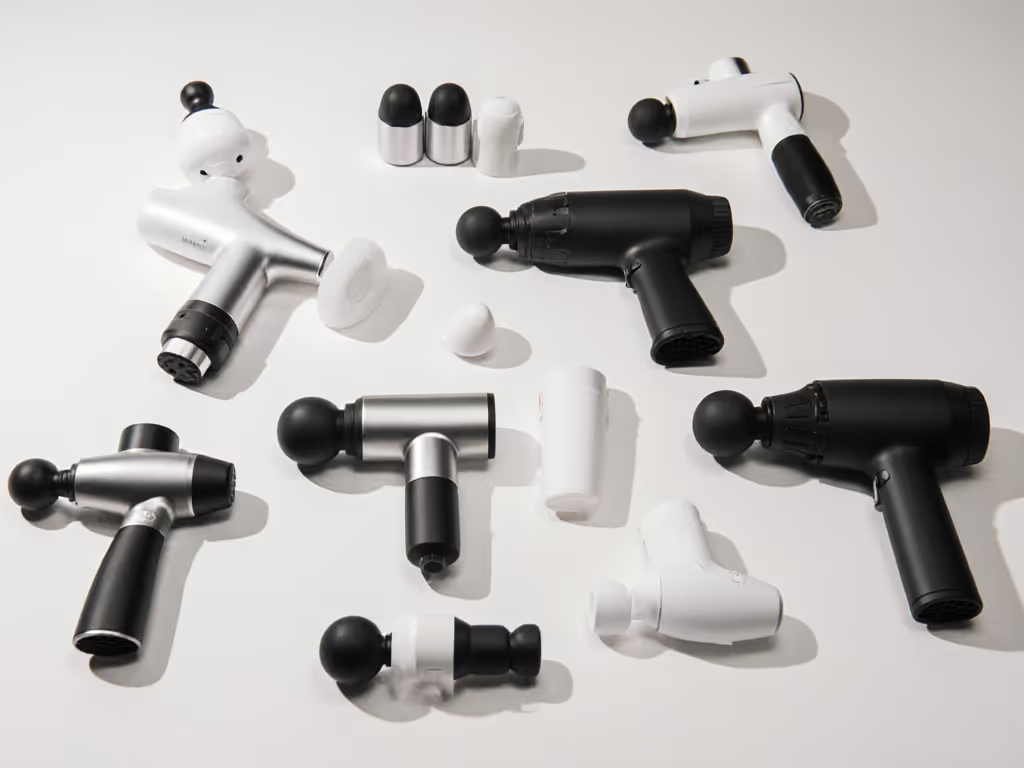
Noise Threshold:
- Decibel measurement: < 65 dB at arm's length = safe for studio corners, hotel rooms, shared spaces. If noise is a top constraint, see our quietest massage guns tested for studio and hotel use.
- Test before purchase: Most retailers allow in-store audition. Bring a smartphone decibel app.
USB-C Charging Reality:
- Non-negotiable: No proprietary barrel connectors.
- Battery life: 2-3 hours at top speed. Sufficient for 4-6 weeks of daily studio use.
- Charging time: 1.5-2 hours, USB-C fast-charging available.
Size and Weight:
- Handle length: 5-7 inches (fits hand without requiring forearm flex).
- Head diameter: 1.5-2 inches (small heads for precision, large for broader muscle groups; interchangeable heads are ideal).
- Total weight: < 1.5 pounds (handheld endurance, especially for solo mid-back access).
- Case: Compact, protective, pocket-fit or small-bag fit.
Attachment Strategy (if applicable):
- Avoid mystery attachments. Clarity: ball head (broad, glutes), flat head (precise, arch), fork head (dual-point, calf) = three roles, easy recall.
Three-Part Routines: Warm-Up, Cool-Down, Micro-Break
Your device is only useful if it integrates into real time. Dancers don't have luxury downtime; recovery lives in margins. For integrating percussion with stretching or cold exposure, follow our recovery sequencing guide.
Pre-Class Warm-Up (5 minutes)
- Choose your dance style protocol above.
- Activate the target areas you'll load most heavily.
- Intensity: Gentle to medium; intention is blood flow and mobility, not exhaustion.
Post-Rehearsal Cool-Down (6-8 minutes)
- Use the style-specific "flush" protocol.
- Focus on areas that announce soreness (calves after turns, glutes after floor, quads after freezes).
- Intensity: Medium to firm; purpose is metabolite clearance and tissue prep for recovery sleep.
Desk Break or Micro-Recovery (2-3 minutes)
- During cross-training or desk hours, target one chronic pain point (hip flexor, IT band, mid-back).
- Gate-to-seat routine, then lights: a quick reset before returning to work or rehearsal.
- Intensity: Light to medium; friction reduction without fatigue.
Data Points Worth Checking
Amplitude (Stroke Length): Measured in inches. Ballet typically prefers 0.3-0.5"; contemporary and hip-hop tolerate 0.4-0.75"+. Deeper isn't always better; overdriven amplitude on small ankle stabilizers can inflame.
Stall Force (Resistance to Muscle): Measured in pounds. A 20-25 lb stall force is industry standard and suits most dancers. Higher stall force (30+ lbs) is unnecessary for recovery; it's marketed to lifters.
Cadence Consistency: PPM should remain steady under load. Units that slow under pressure indicate underpowered motors; they're less effective on dense muscle.
Battery Runtime: 2+ hours at maximum speed validates long sessions or multiple-dancer studio sharing.
Why Tool Choice Matters More Than Hype
Massage-gun marketing noise ("clinical-grade", "pro-athlete tested", "NASA-inspired motor") obscures the simple truth: your device succeeds only if you use it. Noise sensitivity, weight fatigue, charging friction, and case awkwardness are the three silent reasons tools end up in drawers. A quieter, USB-C, compact model you'll actually reach for every training day outperforms a heavier, hyped unit gathering dust.
For dancers (whose recovery windows are small, whose studio time is nonnegotiable, and whose bodies announce specific, style-coded patterns of tightness), the fit between tool and routine is decisive.
Further Exploration
Now that you've mapped recovery to your dance style, test devices in-store: run your chosen protocol, measure decibel output, confirm USB-C charging, and validate handle comfort. Request the manufacturer's amplitude, PPM, and stall-force specs. Compare noise levels across at least two models. Read user reviews from dancers, not generic fitness reviewers; their adherence patterns and pain-point feedback are your real data.
Your recovery tool should work into your schedule, not demand negotiation. If it's quiet, charges via USB-C, and case design fits your rehearsal bag, the likelihood you'll use it weekly (and reap the style-specific relief) jumps dramatically. Test your constraints, decide with intention, and commit to a 30-day trial in your actual routine. Recovery isn't a trophy; it's a habit. Choose accordingly.
Related Articles