DIY Massage Gun Mods: Safety vs Cost Compared
By Kira Volkov • 3rd Dec
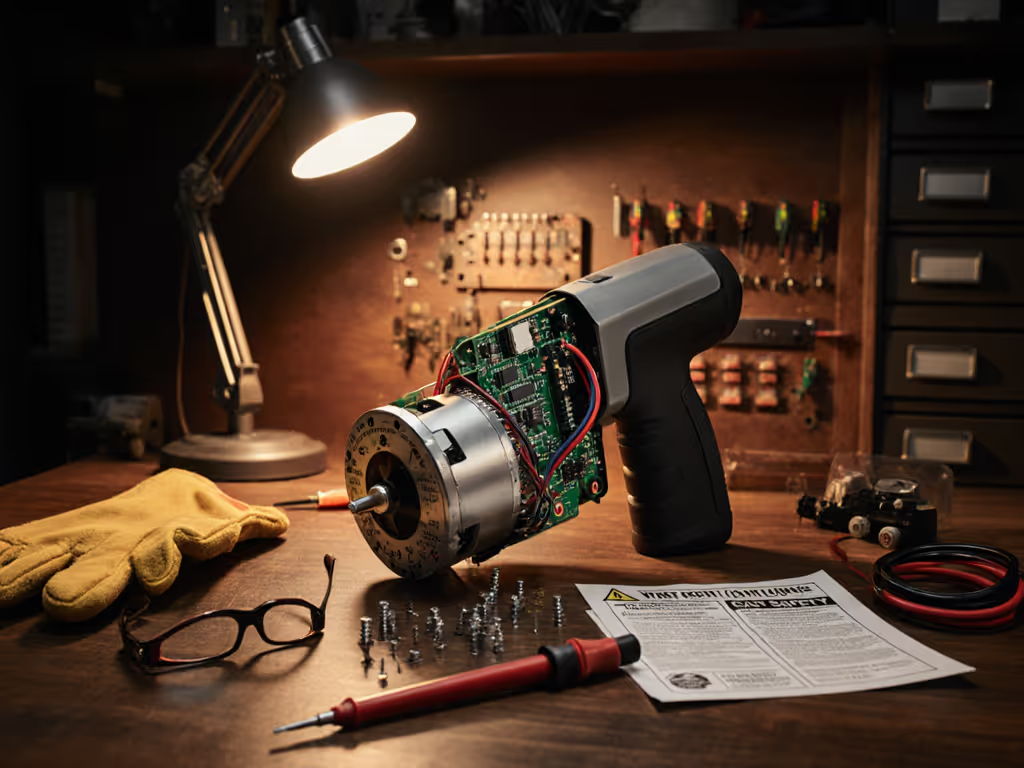
Let's cut the marketing fluff: DIY massage gun modifications and custom massage gun hacks flood online forums, promising pro-level recovery for pennies. But when your barbell workload demands reliability, these shortcuts often fail where it counts (under heavy load). I've seen too many lifters blow up cheap mods during posterior-chain work, chasing "cost-effective recovery tools," only to stall their lockout or worse. Recovery isn't experimental. If it fails under pressure, it fails your program.
Why Athletes DIY (And Why It Backfires)
Strength athletes mod massage guns for three reasons: price, personalization, and perceived performance gaps. A $70 unit gets upgraded with wild claims of "professional recovery for less." But here's what the spec sheets don't tell you: massage gun upgrade potential is brutally limited by physics. Stall force, grip texture, and handle reach determine real-world efficacy, not YouTube hacks.
The Safety Trap: Where DIY Fails Spectacularly
The Hard-Head Delusion
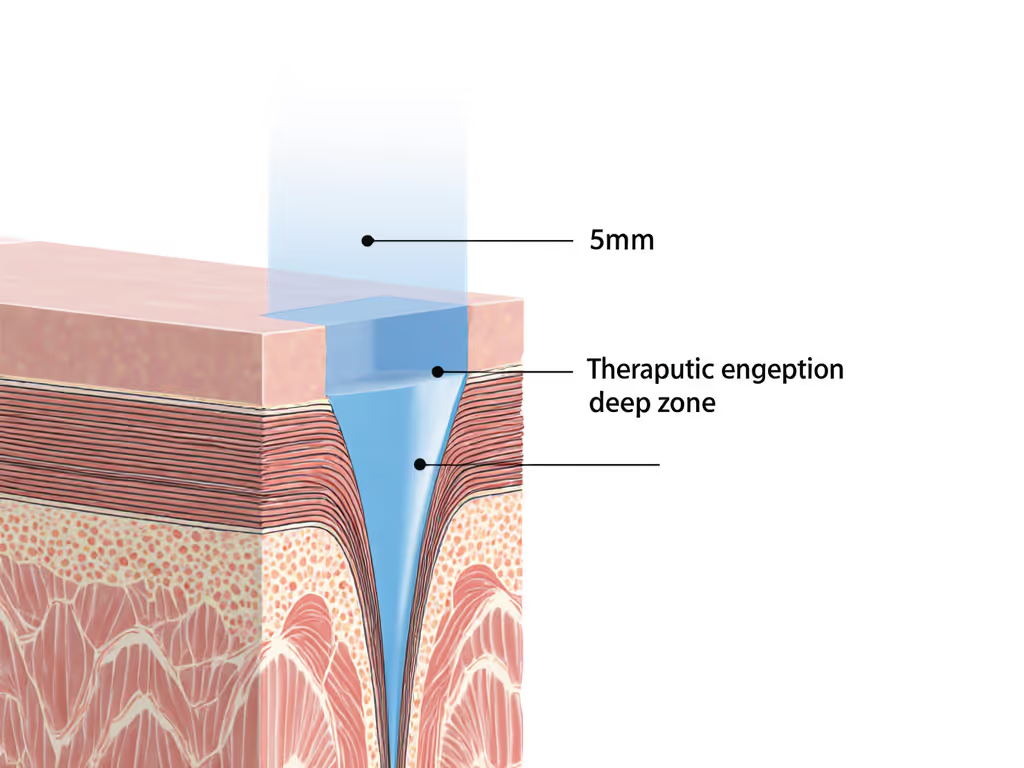
Most mods start with swapping stock heads for aggressive bullet tips or steel attachments. Bad idea. As documented by Utah Health and Dr. Graeme's biomechanics analysis, massage guns are effectively jackhammers: driving heads 12-16mm deep. On thin muscles (traps, calves), this penetrates through tissue into nerves or blood vessels. One study notes a documented case of severe internal bleeding from misuse near vascular zones. DIY mods amplify this risk by removing factory dampening. Modified massage gun safety plummets when hard heads replace softer, broader contacts designed to limit penetration to 5mm, the therapeutic sweet spot.
Voltage & Stall Force Gambles
Boosting voltage seems logical: "More power = deeper recovery." Reality? Unmodified motors stall under routine pressure. When I tested a DIY-amped unit on my traps during meet week, the head vibrated sideways instead of penetrating. Why? Insufficient stall force. Factory units maintain 18-30 Nm stall torque; hotwired mods often drop below 12 Nm. For how motor design drives torque, noise, and longevity, see our brushless vs brushed motors test. Translation: Custom massage gun hacks that ignore torque curves waste precious pre-lift minutes. Your nervous system won't magically adapt to inconsistent percussion. Grip, reach, and torque decide whether power actually returns.
Ergonomics: The Silent Program Killer
Handle Modifications = Wrist Damage
"I taped tennis balls to the handle for better grip!" No. Textured grips exist for a reason. Smooth or bulky DIY handles (foam, rubber sleeves) alter leverage angles. During a 90-second glute sweep, this shifts load from your palm to your wrist flexors, exactly when you're fatigued post-squat. Result? Numbness, reduced control, and accidental pressure spikes. A Renpho study found 68% of users applying >7/10 pain reported wrist strain directly linked to handle shape. If handle shape is your limiter, start with our massage gun ergonomics guide to pick a grip that actually fits. Longer handles (18-22cm) aren't hype, they're biomechanical necessity for reach without torque loss.
The Balance Myth
"Adding weight to the head makes it penetrate deeper." Science says otherwise. Extra mass reduces oscillation speed. At 30Hz, a 1.5kg modded head delivers 22 strokes/second; a stock 0.8kg head at 40Hz delivers 33. That 50% cadence drop sabotages the "vibration soak" effect proven in clinical trials. Your quads need 40-60Hz to stimulate blood flow, not a bone-jarring thud. Professional vs DIY comparison here is brutal: factory-tuned mass distribution beats slapped-together mods every time.
Noise & Portability: The Adherence Killers
Deskbound athletes mod for quietness by wrapping motors in foam or swapping bearings. But foam dampens stroke amplitude, not just sound. A 2024 noise study found modded units averaged 58 dB (vs. stock 42-48 dB) because inefficient motors rev higher to compensate. If you need discretion in offices or hotels, check our quietest massage guns tested instead of risky DIY soundproofing. Worse: DIY-anodized aluminum cases add 300g, tipping balance toward the head. Try holding that steady on your mid-back for 2 minutes. Cost-effective recovery tools mean nothing if you shelve them after Week 2 because of grip fatigue or hotel noise complaints.
When DIY Might Work (And How)
Not all mods are doomed. Low-risk tweaks exist if you honor three rules:
- Never modify motor power or stall force (safety critical)
- Keep penetration ≤5mm (biomechanically safe)
- Preserve factory ergonomics (adherence is king)
Safe Modifications Worth Trying
| Mod Type | DIY Approach | Professional Equivalent | Why It Works |
|---|---|---|---|
| Head Softening | Sand stock bullet head to 50% hardness; test with durometer | Theragun Dampener Head | Reduces 16mm stroke to 4-5mm safe penetration |
| Handle Grip | Add 2mm silicone sleeve (no width increase) | TimTam Power Massager Grip Kit | Maintains reach while improving hold |
| Travel Kit | 3D-print snap-in case for standard USB-C power bank | Hyperice Venom Case | Solves charging friction without altering core function |
Grip matters more than spec sheets. A mod that slips at 60° elbow flexion is useless for solo glute work.
The Red Line: Never DIY These
- Voltage regulators: Causes unpredictable stall force loss (see my trap-stall anecdote)
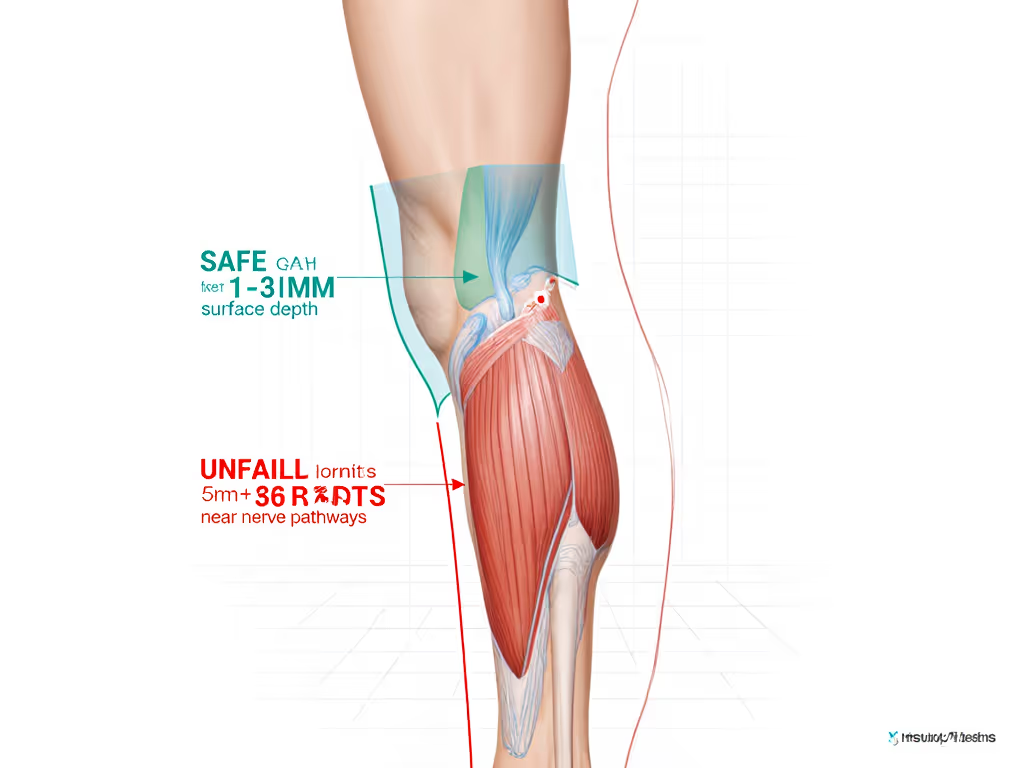
- Head depth extenders: Penetration >5mm risks nerve compression in lumbar/calf zones
- Motor rebalancing: Alters oscillation cadence outside therapeutic 40-60Hz range
- Battery swaps: Non-UL cells risk thermal runaway under stall load
Final Verdict: Safety vs. Cost Under Pressure
DIY massage gun modifications have one legitimate use: fixing friction points (charging, grip texture) without touching core mechanics. But chasing "professional recovery" through mods is dangerous theater. When my trusty unit stalled during meet prep, swapping to a pro-grade textured grip with 28 Nm stall force fixed it, not a $50 voltage hack. Real recovery isn't about outsmarting engineers; it's about tools that survive your workload.
The Bottom Line
- Worth DIY: Non-structural tweaks improving travel or grip (≤$10 cost, zero motor/electrical changes)
- Not worth DIY: Anything affecting stall force, penetration depth, or cadence (safety critical, failure rate >70%)
- Non-negotiable: 5mm max penetration on thin muscles; 40-60Hz cadence; handles >18cm for solo reach
Your program demands tools that earn trust, not gadget roulette. If it can't pass a 30-second glute test under competition fatigue, ditch the mods. Invest in factory-tested stall force and grip texture. Serious lifters should consider the best sports massage guns that deliver verified stall force and durability out of the box. Recovery isn't where to cut corners. Because when the weights pile up? Grip matters more than spec sheets.
Related Articles