Bilateral Muscle Balance: Which Massage Gun Fixes Asymmetry
By Kira Volkov • 4th Apr
The Problem: Asymmetry Isn't Accidental, It's Structural
You've spent months building strength bilaterally. Your back squat climbs. Your deadlift moves well. But somewhere between the barbell and the day job, your body isn't balanced. One side pulls tighter. One lat recruits faster. Your rehab sessions fixate on the weak side, but the tight side derails recovery.
This isn't vanity. Symmetry training massage guns and bilateral muscle balance tools aren't just marketing. Research shows that bilateral force deficit (BLD) (the difference between lifting both limbs together versus the sum of each limb alone) directly impacts strength output and injury risk. Older adults with high BLD recovered nearly to young-adult levels after targeted bilateral training combined with unilateral stability work. But even younger lifters and desk workers carry asymmetry baked into their movement patterns, and standard barbell work alone won't erase it.
The real issue: most massage guns aren't designed for bilateral recovery. They're percussion toys marketed with vague amplitude claims and viral clips. When you need to restore symmetry (to rebalance neural signaling and tissue quality across both sides), you need tools that actually stay steady under pressure and reach the problem zones without grip failure.
Grip, reach, and torque decide whether power actually returns. To make an informed pick for symmetry work, see our massage gun buying guide.
Why Asymmetry Matters More Than You Think
The Neural Root
Asymmetry isn't just muscular; it's neurological. Your nervous system learns patterns. If you favor one side during heavy pressing, one lat fires first. If your desk chair leans you right, your right trap tightens while the left goes slack. Over time, these adaptations embed themselves into motor control and posture. Balance training (and recovery tools that target both sides equally) strengthens neural pathways and proprioceptive feedback, forcing your brain to relearn symmetrical control.
The Structural Risk
Unilateral training, while excellent for stability, can amplify asymmetry if not paired with bilateral work. One study found that bilateral heavy-resistance training significantly reduced bilateral force deficit in older adults. Strength athletes face the same trap: too much single-leg work without rebalancing bilateral output, and compensation patterns harden. A massage gun that can't comfortably address both the left and right glute, hamstring, or lat (with equal stall force and contact consistency) becomes a tool that reinforces imbalance instead of fixing it.
The Performance Tax
When your nervous system compensates for asymmetry, it recruits stabilizer muscles inefficiently. Your core works harder. Your smaller stabilizers fatigue faster. You lose power transfer through the kinetic chain. Runners with asymmetrical calf or IT band tension develop gait flaws. Lifters with uneven lat engagement see lockout stalls on one side. The posterior chain reach test is the fastest way to spot this: if your hand depth differs more than an inch side-to-side, asymmetry is active.
How Massage Guns Address Bilateral Balance
What Matters: Stall Force and Reach
Most massage guns are built for convenient shoulder work, not symmetry protocols. When you need to restore bilateral balance (especially on larger muscle groups like glutes, hamstrings, and mid-back), muscle imbalance correction demands specific performance specs.
Stall force is the threshold where a massage gun's head loses contact or stutters under tissue resistance. A weak stall force means:
- The head bounces off dense tissue instead of sinking into it.
- Your hand must compensate with uneven pressure, tiring one arm before the other.
- Recovery is superficial; you're treating symptoms, not restoring tissue quality.
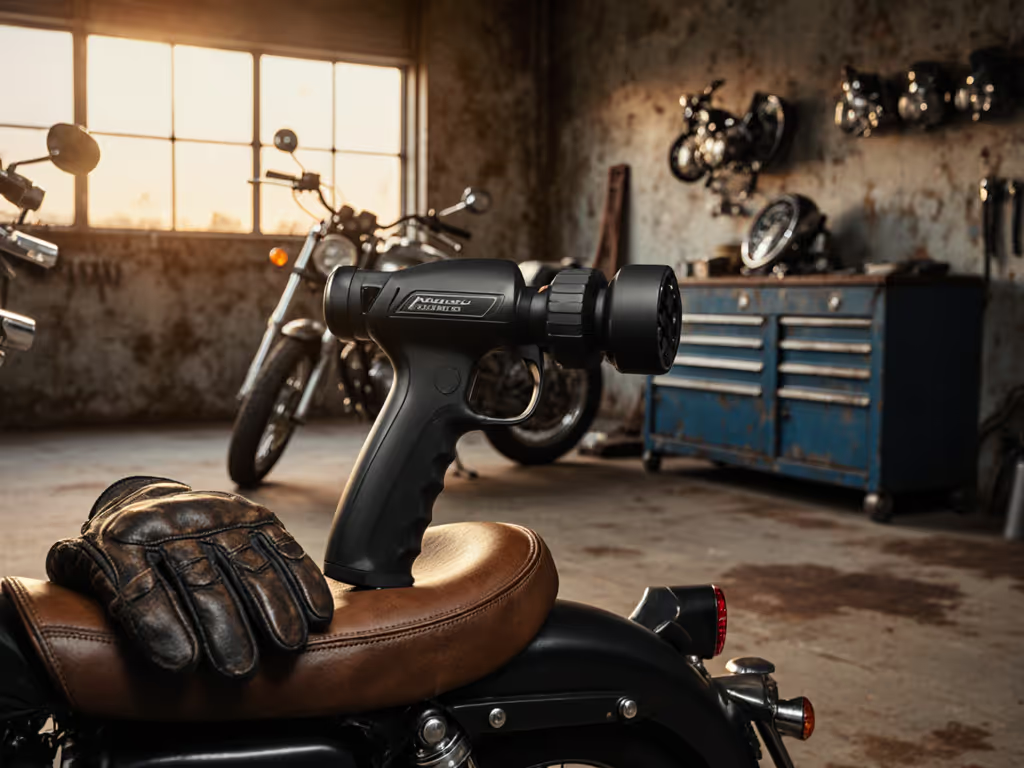
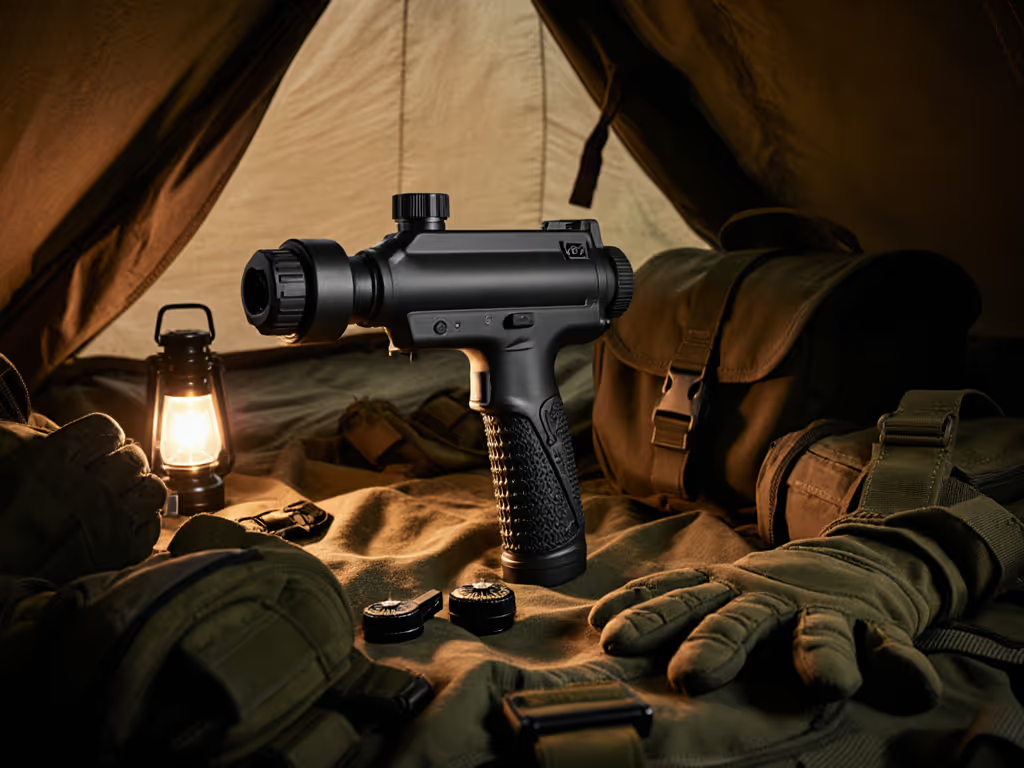
During a meet week, I tested a lightweight massage gun between sets, blasting my traps with a flimsy grip and low stall force. The moment I pressed into the knots, it stalled. The handle twisted in my palm. I grabbed a unit with a textured grip, longer reach, and higher stall force, kept the head steady, and my lockout felt smoother without extra warm-up sets. That's the difference between a tool that works and one that wastes time. Match your device with the right tips using our attachment guide to target lats, glutes, and hamstrings evenly.
Handle Length and Ergonomics
Bilateral recovery means solo access to both sides. If the handle is too short, you'll contort your arm to reach your mid-back, creating asymmetrical tension before you even start. A longer handle and slight angle let you address:
- Both sides of the upper back from a neutral spine position.
- Glutes and deep hip musculature without sacrificing posture.
- Posterior chain symmetrically, without grip fatigue forcing an early stop.
Cadence That Feels Therapeutic
Hertz matters, but so does how the percussion feels. A jarring 40 Hz might seem intense but leaves tissue irritated. A smooth 120 Hz rhythm (paired with adequate stall force) relaxes the nervous system while actually moving fluid through muscle tissue. If the cadence feels prickly or numb-inducing, it's disrupting rather than restoring neural pathways.
Asymmetry Rehabilitation Techniques: Practical Protocol
The Bilateral Approach
- Baseline Assessment: Posterior chain reach test side-to-side. Note any asymmetry >1 inch or joint stiffness differences.
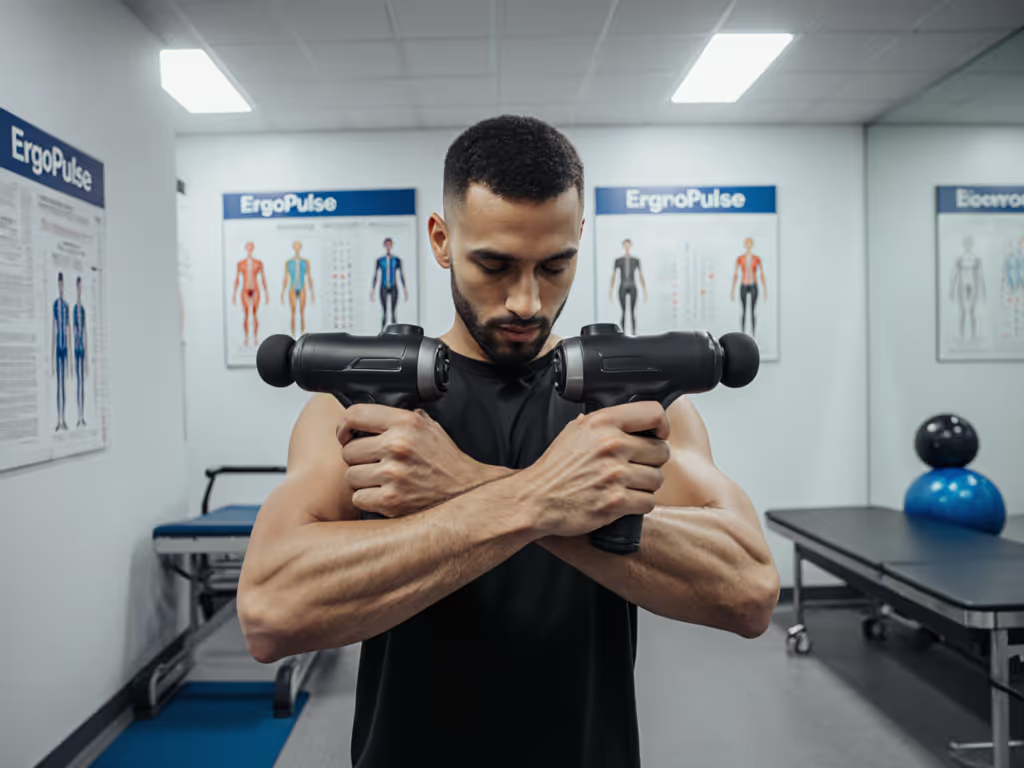
- Mirror Sessions: Spend equal time on both sides, same number of passes, same pressure. If you rush the tight side and half-rep the loose side, you've reinforced the imbalance.
- Deep Work Followed by Light Stabilization: Start with your massage gun on the tight side (glute, hamstring, or lat), 60-90 seconds per zone. Then do 30 seconds on the other side as a lighter touch to maintain parity and prevent overwork.
- Weekly Tracking: Every 7 days, re-test posterior chain reach or hip external rotation. Asymmetry should shrink 0.25-0.5 inch per week with consistent effort.
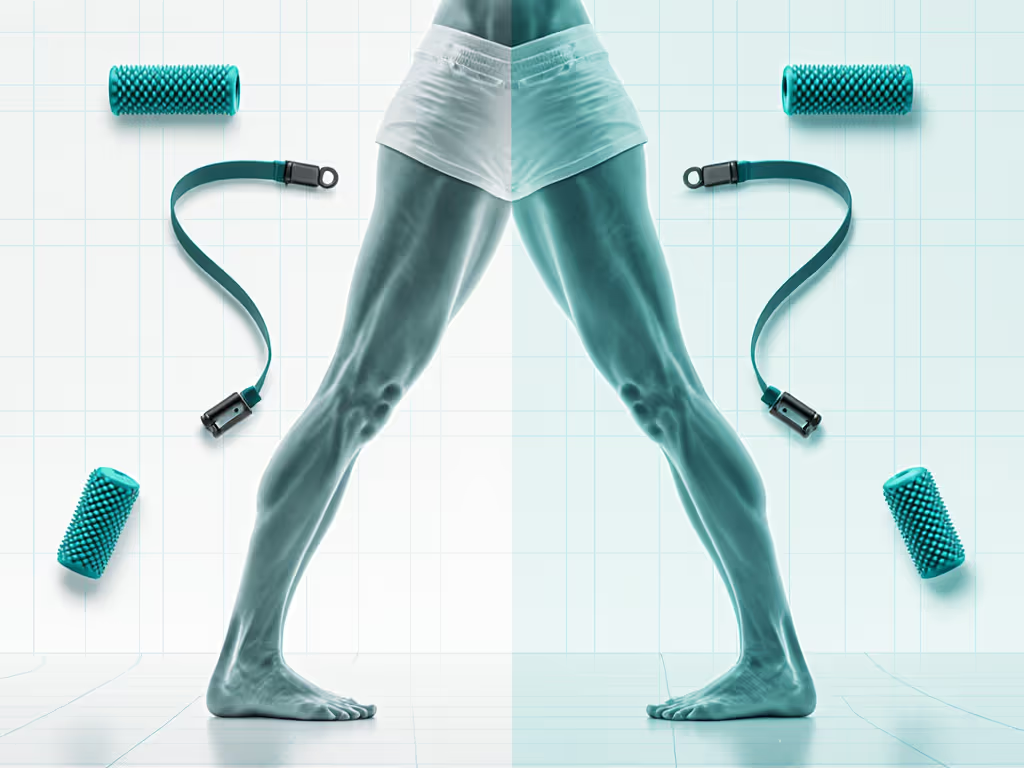
Why Symmetrical Recovery Protocols Work
Research confirms that balance training improves motor control and stabilizer muscle recruitment. For evidence on percussive therapy itself, see our science-backed benefits. When you systematically address both sides with a tool that won't stall or slip, you're not just loosening tissue, you're retraining proprioceptive signaling. Your nervous system gets feedback that both sides can work equally, and motor patterns gradually normalize.
Unilateral balance work alone can increase bilateral force deficit in some measures. Combining bilateral strength training (your barbell work) with symmetrical recovery (your massage gun sessions) collapses that gap. The tool you use has to be reliable enough to treat both sides fairly.
Postural Alignment Massage: What the Data Says
Desk posture creates predictable asymmetries: right-handed workers often see:
- Right shoulder higher and more tense.
- Left lat underdeveloped or longer.
- Right trap and upper-back density.
Postural alignment massage doesn't fix posture via massage gun alone, but consistent postural alignment massage paired with corrective strength work does reduce these imbalances. The mechanism: loosening the tight side reduces neural guarding, allowing the weak side to activate more freely. Over weeks, this asymmetry gap narrows.
The same applies to runners: left-side calf or IT band tightness (often from cambered road running) creates a cascade of compensation up the leg. Symmetrical recovery work (equal attention to both calves and both IT bands) prevents that tightness from hardening into chronic restriction.
The Final Verdict: What to Actually Look For
Non-Negotiable Specs for Bilateral Work
- Stall Force ≥ 40 N (newtons): Anything lower won't penetrate dense tissue on larger muscle groups without head bounce or drift.
- Handle Length ≥ 8 inches: Enables solo posterior-chain access without contortion.
- Weight ≤ 2.2 lbs (1 kg): Heavier than this, and grip fatigue cuts sessions short, defeating the symmetry goal.
- Cadence 100-150 Hz: Smooth, not jarring. Fewer phantom vibrations, better neural integration.
- Grip Texture: Knurled or rubberized. Smooth plastic rolls under sweat or creates dead-hand sensation.
The Mirror Test
When comparing tools, the posterior chain reach test is the simplest real-world filter. If grip comfort limits control, compare designs in our ergonomics guide. Grab each candidate, spend 2 minutes on your right lat, then your left. Does the head stay in contact? Does your wrist ache? Can you reach mid-back solo? If the answer to any is no, it won't survive a weekly protocol, and you'll shelf it by week three.
What It Actually Costs to Fix Asymmetry
A reliable bilateral muscle balance tools setup (massage gun + case + USB charging) typically runs $150-400. Not sure where to spend or save? Read our budget vs premium comparison. A single physical therapy session for asymmetry-related pain is $100-250, with no guarantee of durability. If a quality tool collapses your pain cycles and keeps your bilateral strength balanced, it pays for itself in clinic co-pays avoided and training days preserved.
If it fails under pressure (if it stalls when you need grip, if the handle is too short, if the cadence jars instead of soothes), it fails your program. You'll abandon it, and asymmetry will creep back in.
Summary and Final Verdict
Asymmetry isn't a vanity issue. It's a neurological and structural liability that undermines strength output, increases injury risk, and wastes recovery time. Massage guns marketed for relaxation won't address it. You need a tool designed for bilateral symmetry work: high stall force, ergonomic reach, textured grip, and smooth cadence.
The protocol is straightforward: equal time on both sides, weekly tracking, paired with your barbell work. But the tool has to be reliable. Handle length, stall force, and grip texture decide whether you'll actually use it weekly or watch it gather dust.
Start with the posterior chain reach test. Measure the asymmetry. Spend two weeks on a shortlisted tool, targeting your tight side and monitoring your loose side for balanced recovery. If the head drifts, your wrist fatigues, or the sensation feels harsh, it's the wrong tool. If it stays steady and you feel more balanced after 7 days, you've found a keeper.
If it fails under pressure, it fails your program. Pick one that won't.
Related Articles