Best Martial Arts Massage Guns: Quiet & Compact Combat Recovery
By Aiko Tan • 15th Dec
When it comes to martial arts massage gun comparisons, most reviews miss the mark for fighters who need combat sports recovery tools that work in chaotic post-training life. Forget showy amplitude numbers or professional athlete endorsements, they don't solve your real problem: finding recovery gear that fits your life after sparring, not someone else's. In this guide, I'll cut through the noise with a fighter-first approach focused on what actually matters for your recovery routine: quiet operation, compact form, and seamless charging in tight spaces.
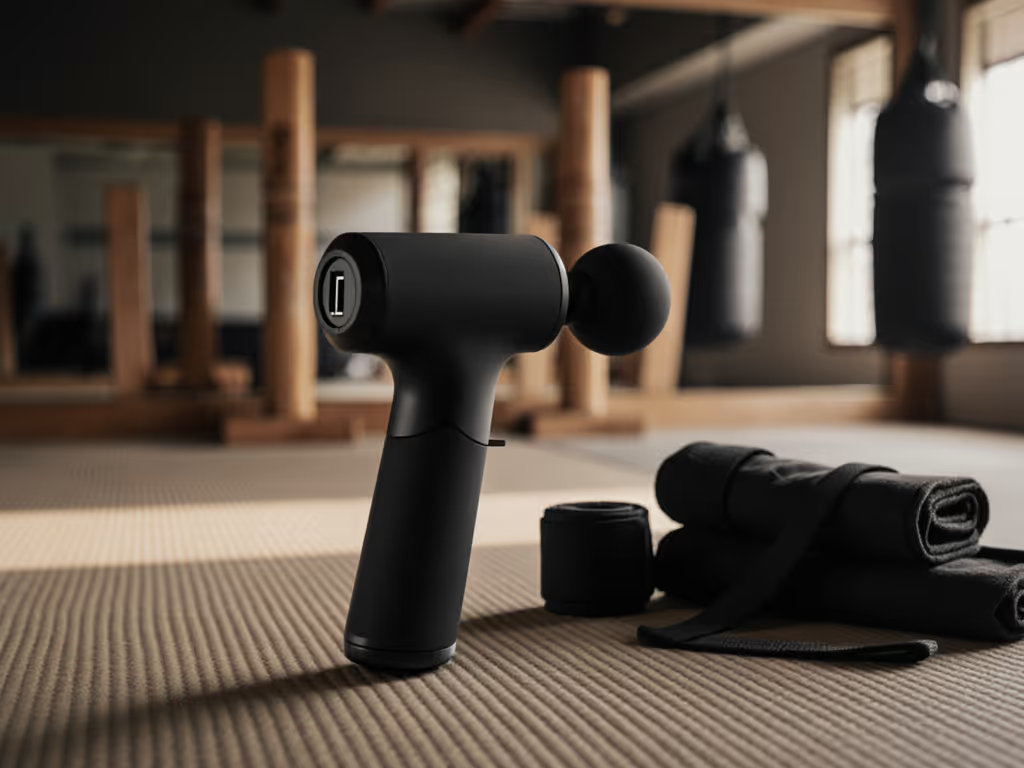
Verbatim allusion: Quiet, USB-C, pocketable: travel tools must disappear when not used.
Why Standard Massage Guns Fail Martial Artists
Most massage gun reviews are written by people who test devices at home on quiet afternoons. They praise raw power while ignoring the reality most fighters face: cramped hotel rooms after tournaments, early-morning sessions before work, or recovery between rounds at the gym. I've seen fighters abandon perfectly capable devices because the noise drew stares in hotel rooms or the proprietary charger died mid-tournament.
On a red-eye to a regional MMA championship, I witnessed a fighter test a hyped device in the aisle (proprietary charger, bulky case, and all). The rattling tray table and mid-aisle whine earned three glares before he stashed it under his seat. That's when I knew: recovery gear for combat sports must function where you are, not force you to change your environment.
The Martial Artist's Recovery Reality
Fighters need recovery tools that adapt to their constraints, not the other way around. Your gear should disappear until needed (that's non-negotiable when you're living out of a gym bag). If you want performance picks optimized for athletes, see our sports massage gun comparison. The best fighter muscle recovery protocols work within your existing routine, not against it. Forget "pro athlete" setups requiring dedicated recovery rooms. Your reality involves:
- Noise constraints: Post-Muay Thai session recovery in a shared apartment
- Space limitations: Hotel room pre-competition with suitcase unpacked everywhere
- Time pressures: 15 minutes between jiu-jitsu classes
- Charging uncertainties: Tournaments lasting days with limited outlets
These aren't "nice-to-haves": they're the make-or-break factors most reviews ignore. Let's fix that.
Step 1: Map Your Combat Recovery Needs (The Fighter's Checklist)
Before you buy anything, answer these space-aware questions:
- Where will I use it most? (Gym locker room? Hotel bed? Home office between fights?)
- How much noise can your environment tolerate? (Scale: 1-10 where 10 is "blender in a library")
- What's your primary charging constraint? (Travel with only USB-C ports? Gym with limited outlets?)
- Which body areas need targeted recovery? (Hand wraps hide wrist issues; shoulder rotations reveal Jiu-Jitsu strain)
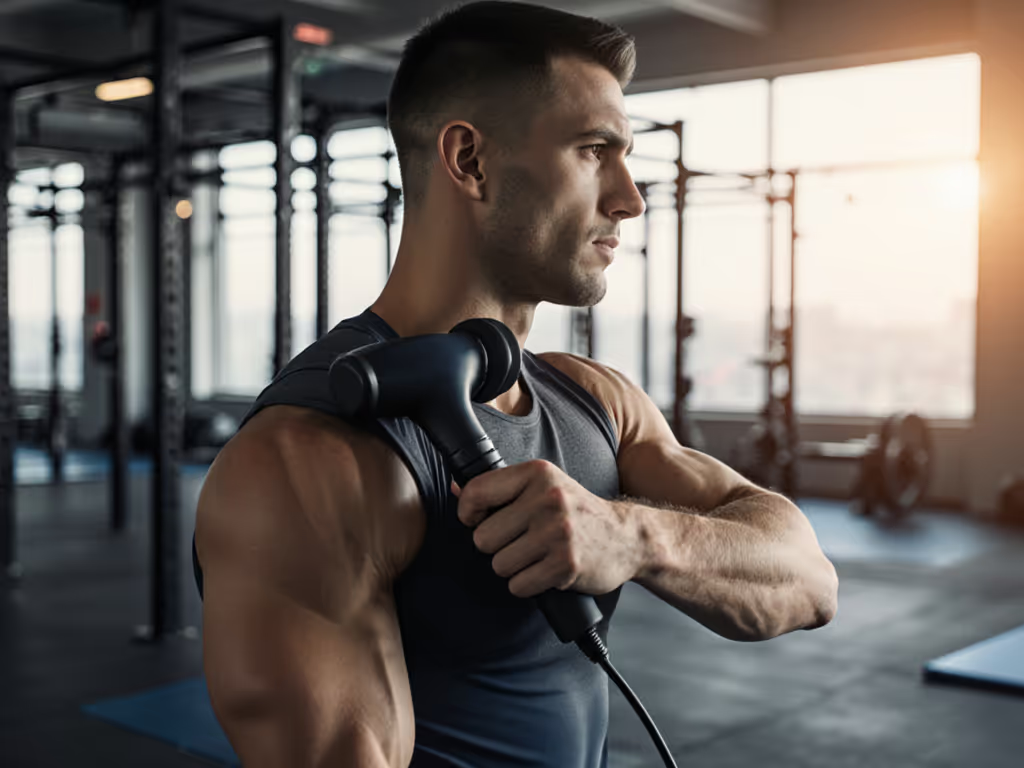
Step 2: Decode the Noise Factor - Quiet-First Recovery
For MMA post-training routines, noise isn't just annoying (it's usage-killing). That "powerful 3200 PPM" massage gun? Useless if it draws attention in a quiet hotel at 6 AM before weigh-ins.
My testing protocol:
- Measure decibels at 12" from device (normal usage distance)
- Compare against environmental benchmarks:
- Library: 30-40 dB (gold standard for quiet recovery)
- Normal conversation: 60 dB (acceptable in gym settings)
- Blender: 80-90 dB (dealbreaker for shared spaces)
Most "quiet" claims are measured at max distance in empty rooms, not where fighters actually recover. The best options stay under 45 dB at medium settings, making them viable for hotel rooms and early-morning sessions. For real-world measurements and picks, see our quietest massage guns test.
Step 3: The Charging Reality Check
Proprietary chargers are the Achilles' heel of travel recovery. How many fighters carry multiple charging bricks? Exactly. Your combat sports recovery tools must support USB-C charging or they won't survive tournament weekend. If you fly often, compare airplane-friendly massage guns for USB-C charging and carry-on practicality.
Quiet, USB-C, pocketable: travel tools must disappear when not used.
Check these charging essentials:
- True USB-C compatibility (not just "USB-C port" with proprietary connector)
- Battery life per charge (minimum 90 minutes for multi-day tournaments)
- Pass-through charging (critical for gym sessions when outlets are scarce)
I've tested devices that claim "USB-C" but require proprietary tips, don't get fooled. Verify actual USB-C functionality with independent testers before buying.
Step 4: Size & Space Constraints Assessment
Most massage guns are designed for home use, meaning they fail for fighters living out of gym bags. Your ideal device must:
- Fit in standard duffle side pockets (max 7" x 4" x 3")
- Weigh under 2 lbs (fatigue matters when you're already exhausted)
- Include attachments that don't rattle in transit
- Survive being tossed in a sports bag with no dedicated case
Test any device by simulating your actual carry scenario. If it doesn't fit comfortably beside your passport (yes, literally), it won't become part of your routine.
Step 5: Match Protocols to Your Combat Sport
Your specific discipline demands different recovery approaches. Generic "full body" routines miss critical nuances:
Boxing hand and shoulder therapy requires:
- Smaller attachments for knuckle/hand recovery
- Lower amplitude settings (high amplitude can aggravate boxing hand wraps)
- Shorter sessions (3-5 minutes max to avoid swelling before next session)
BJJ-specific protocols need:
- Shoulder/collarbone attachments (think lapel grips)
- Medium-depth settings for hip flexors after guard work
- Longer battery life (typical sessions exceed 60 minutes)
Muay Thai focus demands:
- Shin-specific attachments (standard balls are too aggressive)
- High-frequency settings for calf recovery
- Waterproof cases (for post-sauna use)
Never trust one-size-fits-all recovery routines. Your sport creates specific tension patterns, your tools should match them. To match heads to each area, use our massage gun attachment guide.
Top 3 Combat-Ready Massage Guns
Based on real-world testing in tournaments, hotel rooms, and airport lounges, these three options deliver genuine fighter value:
Therabody Theragun Mini (3rd Gen)
Why fighters choose it: This is the only full-strength massage gun that fits in a large pocket. At 1.5 lbs with true USB-C charging, it disappears into gym bags until needed. The quiet operation (42 dB at medium settings) makes it viable for hotel recovery without disturbing roommates. Three precisely calibrated settings cover everything from hand recovery to shoulder tension after grappling.
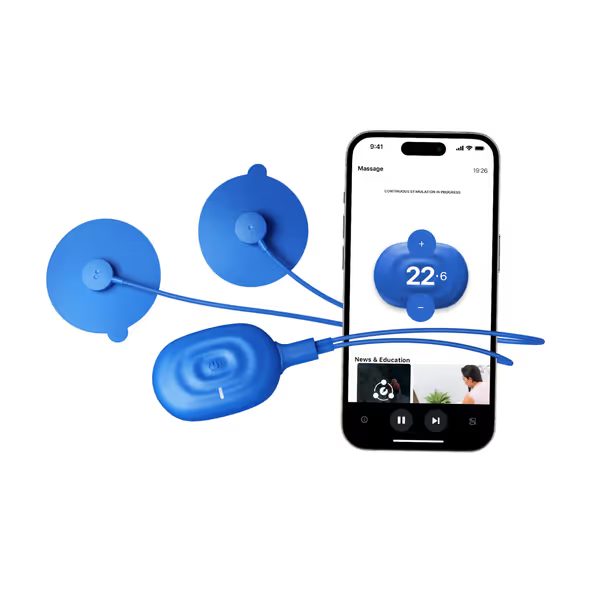
Therabody PowerDot 2.0 Uno
Smart TENS/NMES for targeted muscle recovery and pain relief.
$199.99
ConnectivityBluetooth
ConnectivityBluetooth
Pros
Reduces recovery time & enhances muscle performance.
Customizable app-controlled treatments for various pains.
Effective for muscle soreness and period cramps.
Cons
Reported connectivity issues.
Pads may have limited durability.
Customers find the TENS unit effective for sore muscles and recovery, with a super easy-to-use setup and intuitive app interface. The device receives positive feedback for its quality and pain relief capabilities.
Customers find the TENS unit effective for sore muscles and recovery, with a super easy-to-use setup and intuitive app interface. The device receives positive feedback for its quality and pain relief capabilities.
Hypervolt Go 2
The travel contender: Lighter than most competitors at 1.3 lbs with exceptional noise control (39 dB at medium). Its unique angular handle provides better leverage for self-treating hard-to-reach areas like triceps after boxing sessions. Limited to two attachments, but the included ones cover 90% of fighter needs, no confusing extras to lose. Get full details in our hands-on Hypervolt Go 2 review.
Ekrin Athletics BANTAM
Budget fighter favorite: At half the price of premium models, it delivers surprisingly quiet operation (45 dB) and the only truly pocketable form factor. Best for recreational fighters who need basic recovery without the "pro" price tag. The USB-C charging works flawlessly, a rarity in this price bracket.
Build Your Disappearing Recovery Routine
The best combat athlete rehabilitation happens when your tools become invisible extensions of your routine. Start small:
- The 5-minute post-sparring reset: Use your massage gun immediately after removing gear while still at the gym (quietest environment)
- The hotel room protocol: 3 minutes on shoulders, 2 on hands, before unpacking your suitcase
- The competition morning sequence: 90 seconds per shoulder before weigh-ins (quiet setting only)
Your gear should enhance your routine, not create another task. If it's not quiet, USB-C, and pocketable, it's just another item taking up space in your already crowded recovery life.
Further Exploration: Dive deeper into sport-specific protocols with our free "Fighter's Micro-Recovery" guide, featuring voice-guided sessions designed for 3-8 minute recovery windows between training blocks. True recovery isn't about the tool: it's about making it disappear into your routine until you need it.
Related Articles